
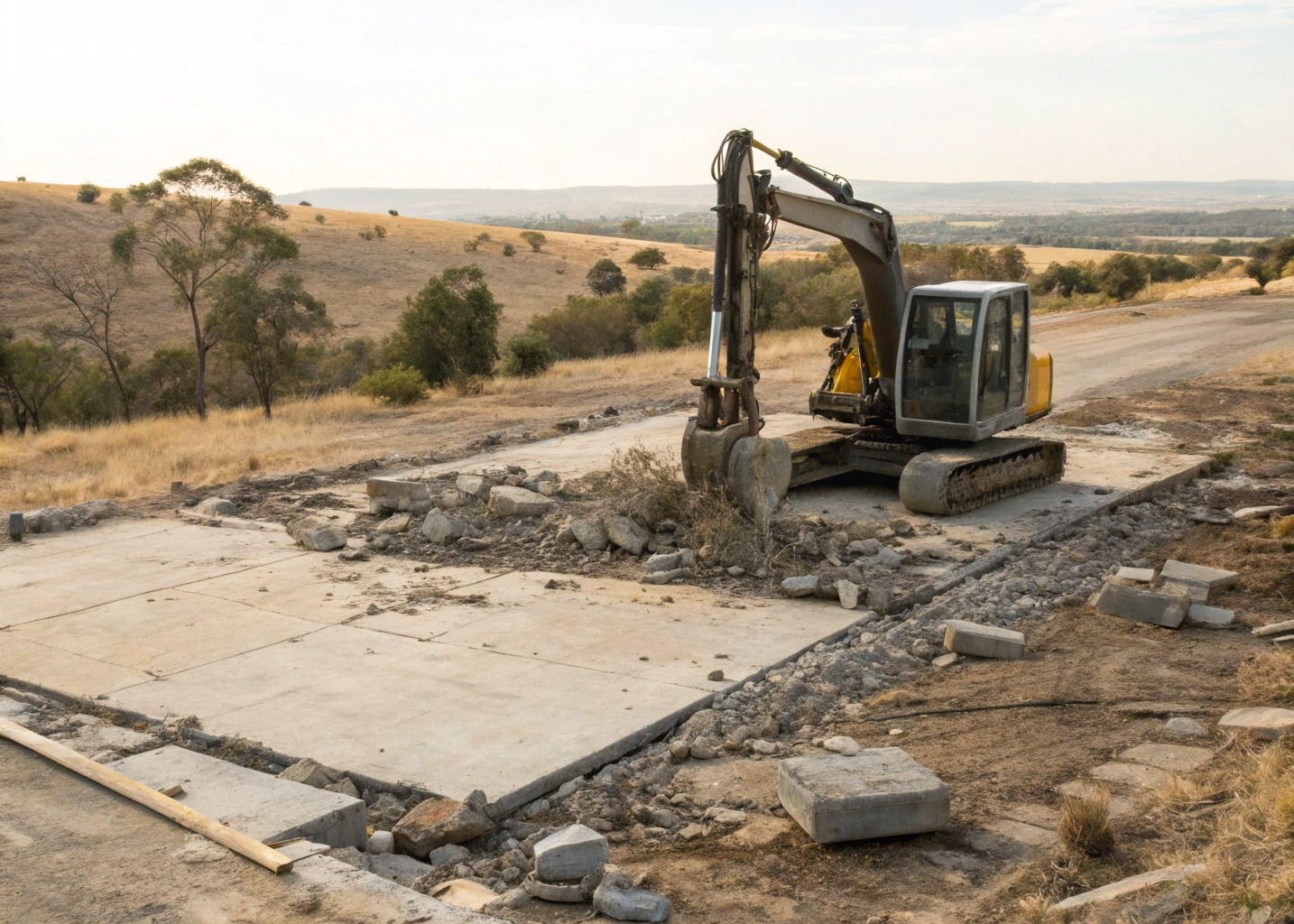
How Much Does Slab Demolition Cost in Bendigo?
Slab demolition and removal in Bendigo typically costs between $50 and $150 per square metre, depending on slab type, thickness, and site conditions. Key factors that affect the final price:
- Slab thickness — standard residential slabs (100mm) cost less to demolish than thicker commercial or house slabs (150mm+)
- Steel reinforcement — reinforced slabs need cutting equipment and separate handling, which adds to labour time
- Site access — open sites where an excavator can get in are quicker and cheaper than confined areas that need handheld jackhammer work
- Slab type — shed bases and patio slabs are generally at the lower end; garage floors, house slabs, and commercial floors sit higher
- Debris disposal — full removal and off-site disposal should be included in any professional quote; confirm this before accepting a price
For an accurate price in Bendigo, a site assessment is the only reliable method. Slab thickness, reinforcement, and access vary significantly between properties and directly affect the final cost.

What Slab Demolition Actually Involves
Slab demolition is a managed process — not just breaking concrete until it comes apart. It starts with a site assessment to understand what’s there and how best to remove it. From there, the slab is broken in a controlled way, reinforcement steel is cut and handled separately, and the rubble is loaded and taken off site. The job ends with a clear, clean site ready for whatever comes next.
How that process runs depends on the slab. A small shed base comes out differently to a full house slab or a commercial floor. Thickness, reinforcement, access, and proximity to other structures all shape the approach. Getting those details right from the start is what keeps the job clean and the new work that follows on solid ground.
Assessing the Slab Before Work Begins
Every slab demolition job starts with an assessment. What we find on site determines the equipment we bring, the method we use, and how long the job takes. There are four things we look at before any work begins.
✓ Pre-Demolition Checklist
- Slab thickness and reinforcement type
- Site access for equipment
- Proximity to existing structures
- Underground services location
- Debris removal and disposal plan
Slab Thickness & Reinforcement: Thickness and reinforcement tell us which equipment to bring and how long the job will take on site.
Site Access for Equipment: Access determines whether we run an excavator rock breaker or handheld jackhammers — poor access changes the method, not the outcome.
Proximity to Existing Structures: Slabs close to footings, fences, or retaining walls need controlled breaking so what’s staying put doesn’t get damaged in the process.
Underground Services: We check service locations — including a Dial Before You Dig check — before any breaking starts, on every job.
Demolition Methods Used on Bendigo Sites
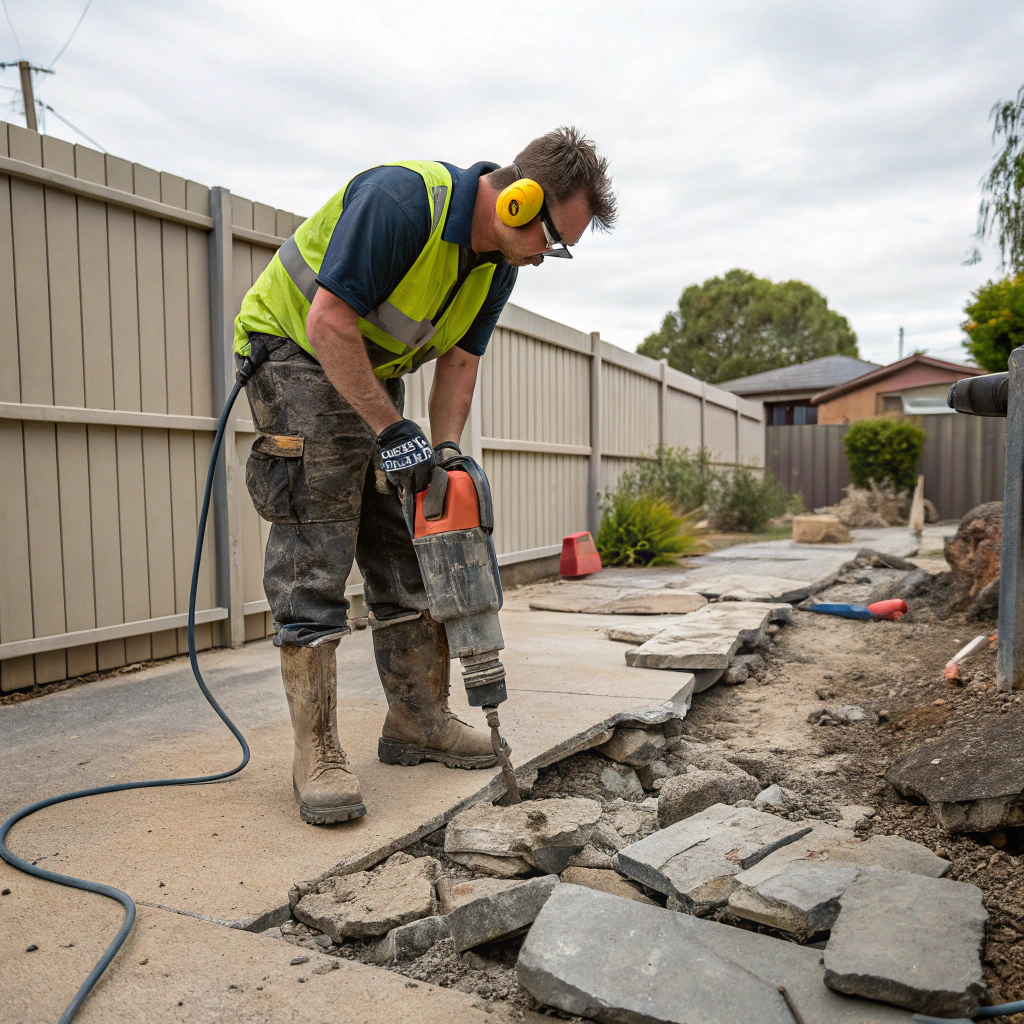
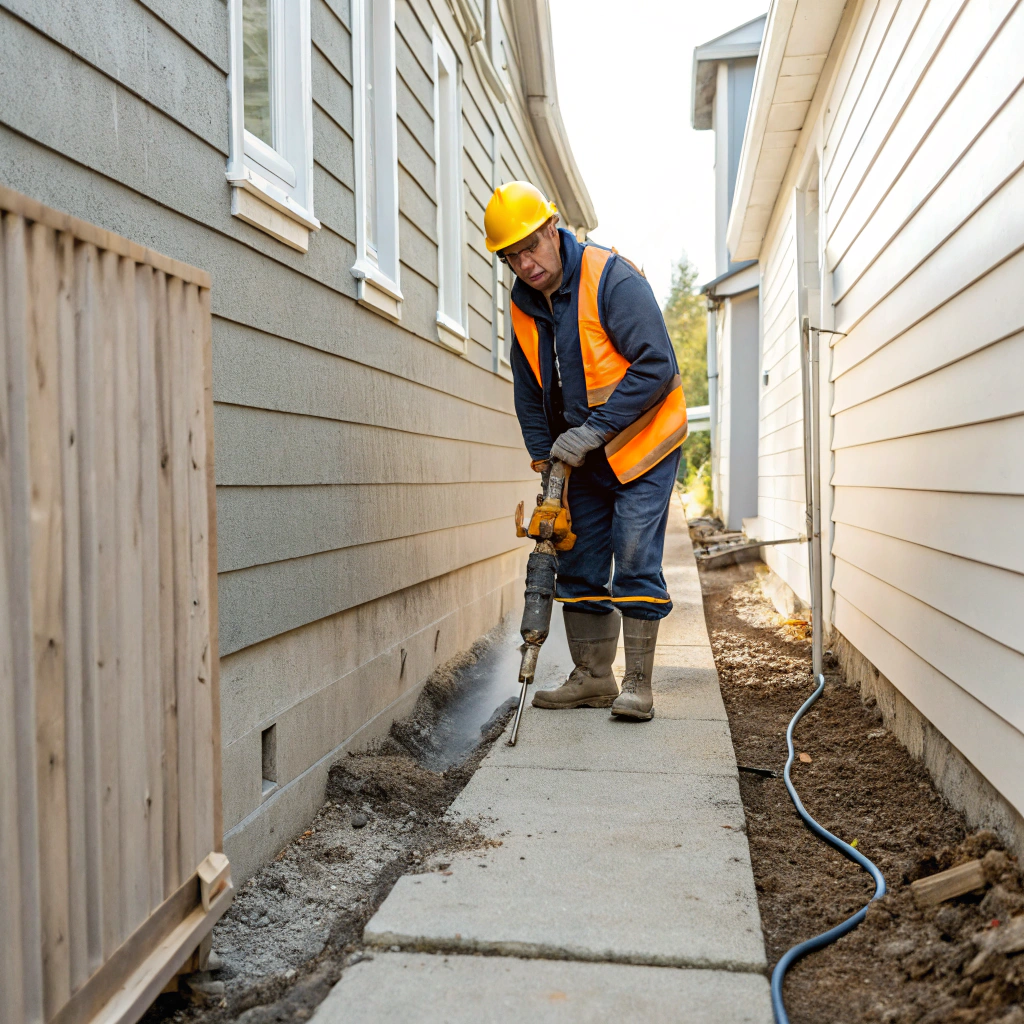
Jackhammer Work: Electric and hydraulic jackhammers are the standard tool for residential slabs and confined sites. Most suburban Bendigo blocks have limited side access, making this the go-to method for garage floors, patio slabs, and shed bases where an excavator can’t get in.
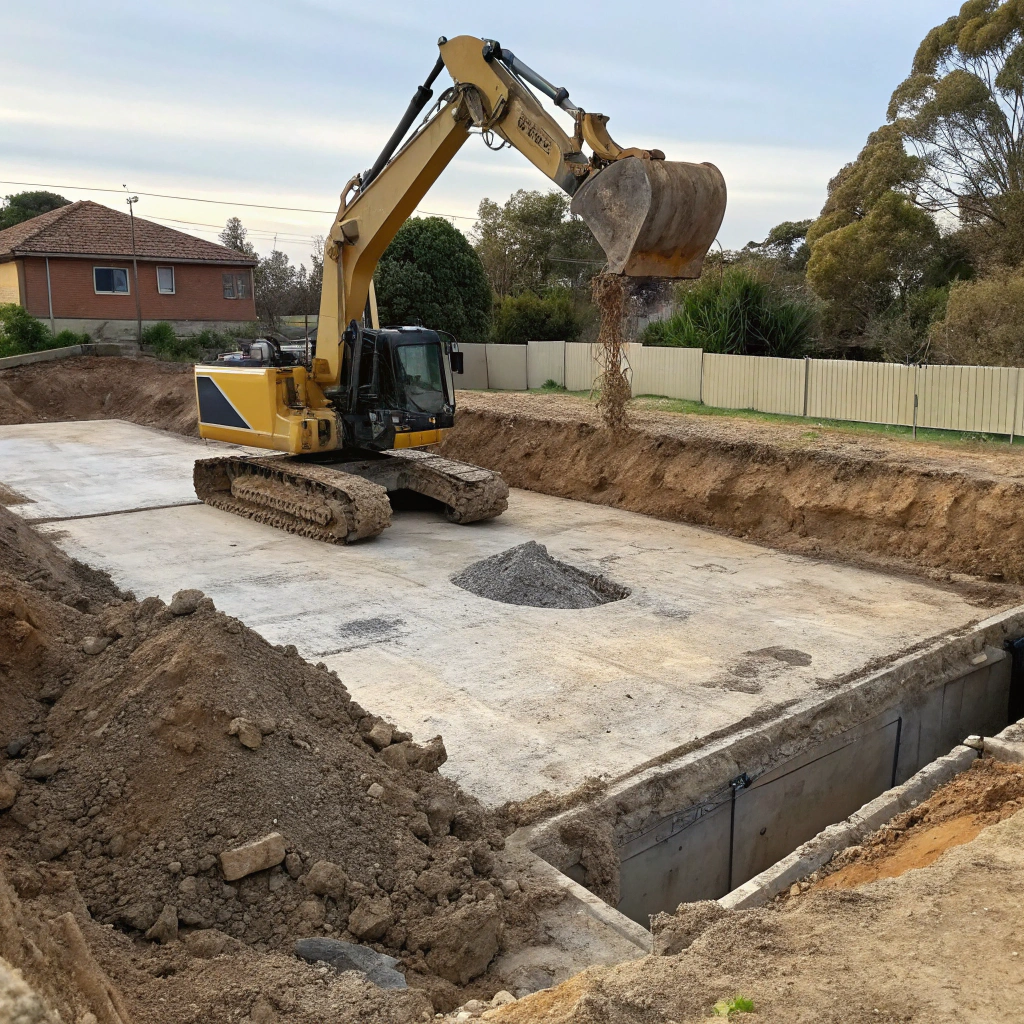
Excavator Rock Breaker: For larger jobs — house slabs, commercial floors, and big shed bases with open access — an excavator-mounted rock breaker is the faster, more efficient option. It handles thick and heavily reinforced slabs better than handheld equipment and turns over material quickly when the site allows it.
Saw Cutting: Saw cutting is used at slab edges, around service penetrations, and anywhere precision matters before breaking begins. It stops cracks from running into areas that need to stay intact — like a section of slab sitting next to a footing or a boundary structure.
Material Handling: Once the slab is broken, a bobcat gathers and loads the rubble into the removal vehicle. Reinforcement steel is separated from the concrete during this phase and handled and disposed of separately. This is what turns a broken slab into a clean, clear site.
Slab Types We Demolish Across Bendigo
We remove all types of concrete slabs across Bendigo and surrounding areas. Whatever the slab, the process is the same — assessed properly, removed cleanly, and site left ready for what follows.
Garden shed and small outbuilding bases are typically lightly reinforced and straightforward to remove.
Garage floor slabs are one of the most common jobs we handle, usually prior to a full garage rebuild or redevelopment.
Patio and entertaining area slabs are removed as part of outdoor renovations where the existing concrete is beyond repair or simply in the wrong place.
House slabs are larger scope jobs involving careful planning around services, footings, and site access.
Commercial floor slabs are handled for site redevelopments and fitouts where the existing floor needs to come out before new work can begin.
Handling Steel Reinforcement During Demolition
Most slabs have some form of steel in them — either mesh laid flat through the slab or rebar running through thicker, more heavily loaded sections. When the concrete breaks apart, that steel doesn’t just come out cleanly on its own. It needs to be cut as the work progresses, pulled free from the rubble, and kept separate from the broken concrete throughout the loading phase.
We carry cutting equipment on every reinforced slab job. As sections break away, the steel is cut back, separated, and set aside for appropriate disposal. It doesn’t get mixed in with the concrete rubble and it doesn’t get left on site.
This is standard practice for our team — not an add-on and not something that catches us off guard mid-job. Reinforced or not, the slab assessment at the start of every job tells us exactly what we’re dealing with before the first break is made. It’s all factored into the quote from day one.
Site Condition After Demolition — What Happens Next
Once the slab is out and the site is cleared, the job isn’t quite finished. What’s underneath the old slab matters just as much as what came off the top.
Keeping Demolition and New Slab Installation Under One Contractor
When demolition and the new slab installation are handled by two separate contractors, there’s always a gap in the middle. Who’s responsible for the sub-base condition? Who manages the timing between one job finishing and the next starting? Who wears it if something isn’t right when the new contractor arrives on site?
Keeping it all under one contractor removes that problem entirely. Concrete Bendigo Pro handles both the demolition and the new slab installation, which means the handoff between the two stages is managed internally. No coordination gap, no blame shifting, and no project management burden sitting on the homeowner.
The site assessment that starts the demolition job feeds directly into the planning for the new pour. Sub-base condition is already known. Timing is already managed. The customer doesn’t have to chase two separate businesses or worry about what gets lost between them.
If you’re ready to get the old slab out and the new one planned, get in touch and we’ll walk you through both stages from the start.
Frequently Asked Questions
Yes, all broken concrete and reinforcement steel is loaded and taken off site as part of every demolition job. We don’t leave rubble for you to deal with.
It depends on the size and thickness of the slab and how accessible the site is. A standard garage floor or patio slab typically takes a day. Larger jobs like house slabs or commercial floors may take two to three days.
We assess proximity to existing structures before any work begins and use controlled breaking techniques where the slab sits close to footings, fences, or retaining walls. Protecting what’s staying put is part of how we approach every job.
Yes, always. We complete a Dial Before You Dig check and inspect service entry points on site before any breaking starts. It’s a non-negotiable step on every job we do.
Yes. Where excavator access isn’t possible, we work with handheld jackhammers. Limited access changes the method, not the outcome.
Yes. We handle both the demolition and the new slab installation. Keeping it under one contractor means no coordination gap between the two stages and no project management burden on you.
We can assess that during the site visit. In general, if the slab has significant cracking, poor drainage, or is in the wrong position for new work, full removal is usually the right call. We’ll give you a straight answer either way.
Get a Free Quote & Site Assessment
Old slab taking up space where new concrete needs to go? We’ll come out, assess what’s there, and give you a clear picture of what the demolition involves and what it’ll cost — before any work begins.
Concrete Bendigo Pro services Bendigo and surrounding areas. One contractor for the full job, from first break to cleared site.
Call us: 03 4420 4792 Email: [email protected]
No obligation. No guesswork. Just a straight answer on what your job involves and what it’ll take to get it done.
