
What Is Ready Mix Concrete and Why Is It the Standard Choice?
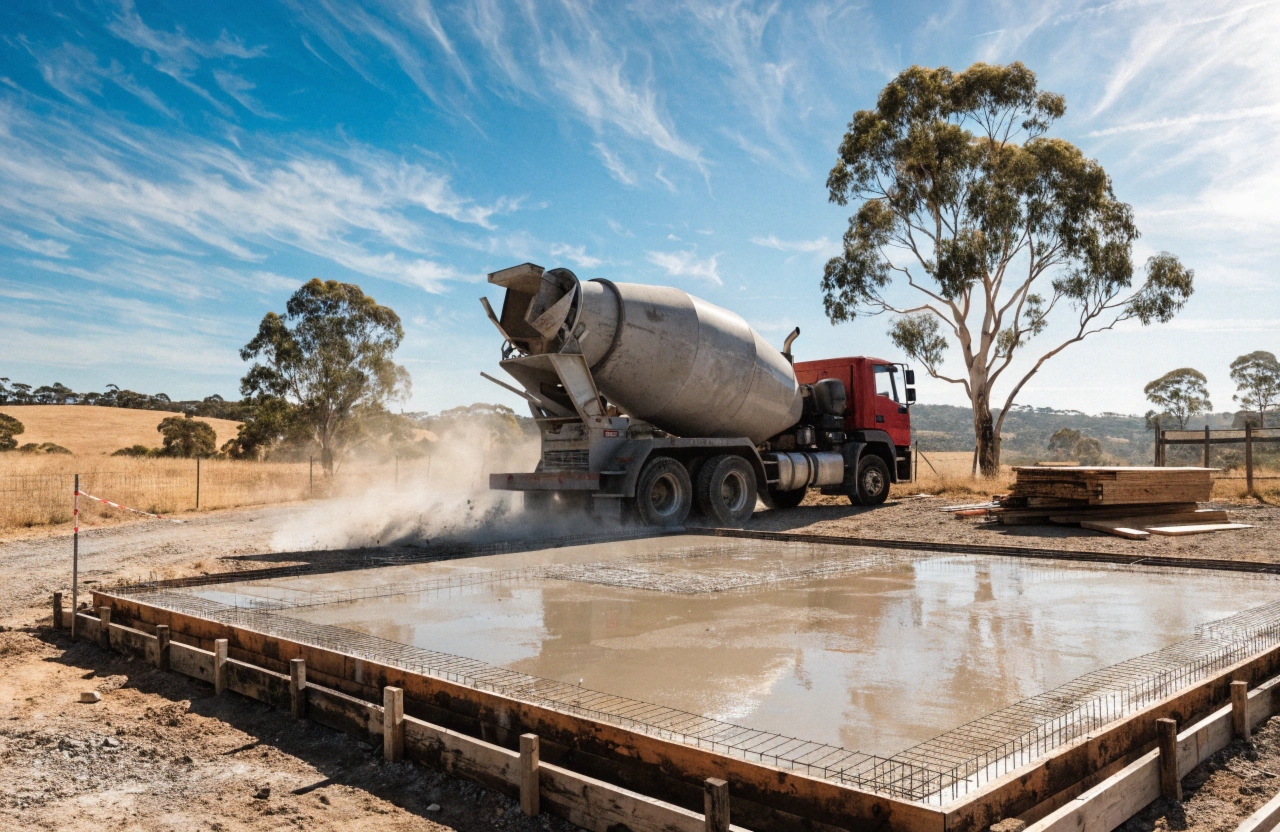
Ready mix concrete is batched at a central plant to a precise mix design, loaded into a transit mixer truck, and delivered to your site in a fresh, workable condition ready to pour. The drum keeps turning in transit to maintain consistency — what arrives on site is the same product that left the plant, proportioned accurately and ready to go.
For anything beyond the smallest concrete pour, ready mix is the only practical choice. Site-mixed concrete — batching on location using a small drum mixer, bags, and aggregate — simply can’t deliver the volume, consistency, or speed that most residential and commercial pours require. A house slab, a driveway, a commercial hardstand — these aren’t jobs you can run through a site mixer bag by bag.
The advantages ready mix brings to every pour:
• Consistent quality — every cubic metre is batched to the same specification at a controlled plant environment, not hand-scooped on a job site
• Accurate proportioning — water-cement ratios, aggregate sizing, and admixture dosing are controlled precisely, not estimated
• Volume capacity — a single truck load covers 7–8 cubic metres; staged deliveries handle pours of any size
• Labour efficiency — your crew pours, screeds, and finishes while the truck does the supply work
For bulk concrete supply, large commercial pours, and residential projects across Bendigo, ready mix removes the variables that create quality problems on site.

Mix Design and Strength Grades — Getting the Spec Right
Volume Calculation and Ordering — Getting the Numbers Right Before You Pour

Concrete volume is one of those things that looks straightforward until it isn’t. A small miscalculation on a large pour creates one of two problems — both expensive.
Over-order and you’re paying for material you can’t use and dealing with a wet load that needs to go somewhere. Under-order on a large pour and you risk a cold joint — the point where fresh concrete meets partially set concrete, creating a structural weakness that can’t be fixed after the fact. On a house slab or commercial floor, a cold joint isn’t a cosmetic issue. It’s a structural one.
How We Calculate Your Volume
The basic calculation is straightforward — length × width × depth gives you cubic metres. Where it gets more complex:
• Irregular shapes — L-shaped slabs, pours with penetrations, tapered footings
• Waffle pod systems — displacement from pods reduces the concrete volume required but needs accurate pod layout to calculate correctly
• Strip footings — running metres with varying cross-sections add up quickly and are easy to underestimate
• Waste and contingency — ground absorption, formwork tolerances, and minor variations mean ordering exactly to calculation is risky on larger pours
We work through the volume calculation with you during the quoting process. For most residential pours we’d recommend a 5–10% contingency allowance on top of the calculated volume — enough cover for typical site variables without significant waste.
Get the volume right before you order. It’s a conversation that takes ten minutes and saves a costly pour day problem.
Bendigo's Climate and Concrete Workability — What the Weather Does to Your Pour
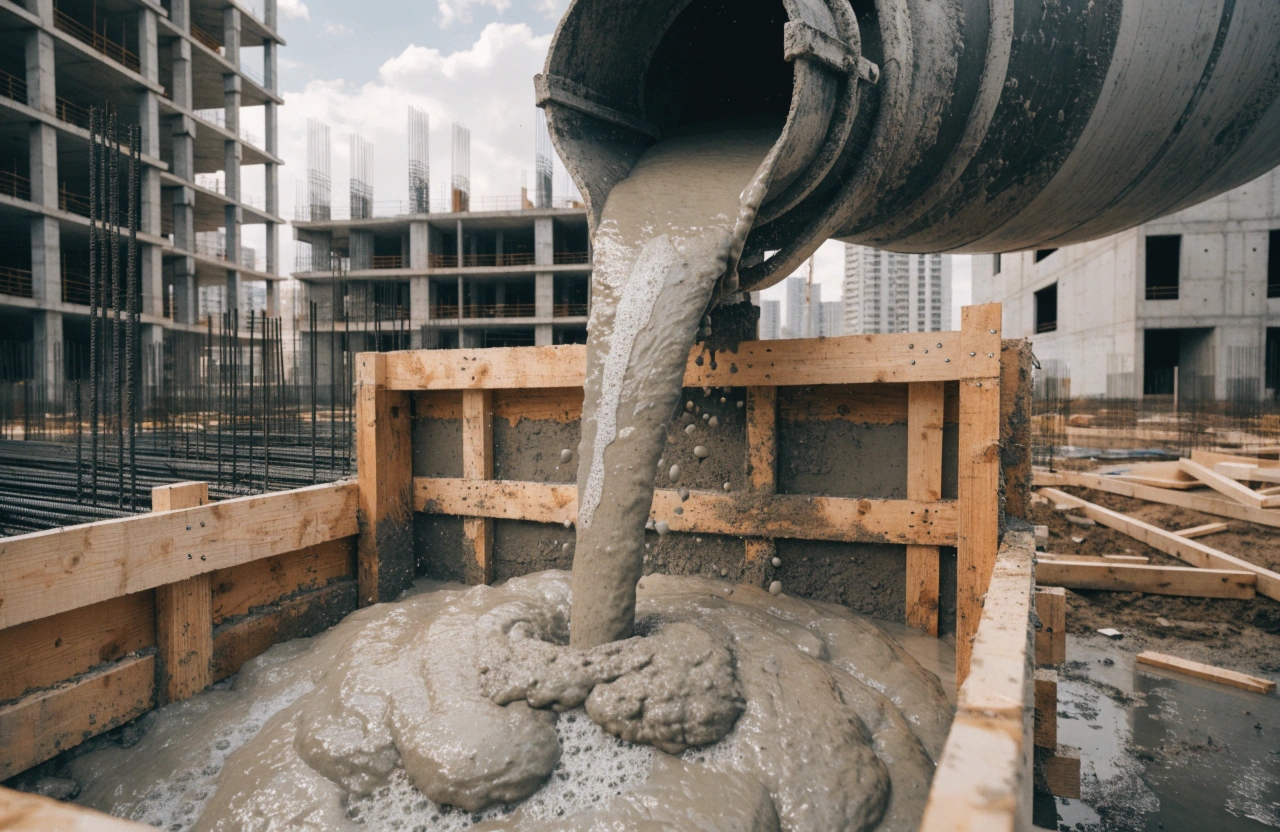
Central Victoria’s seasonal temperature range is one of the more demanding environments for concrete work in regional Australia. Bendigo regularly hits 38°C and above through summer, drops to single digits overnight in winter, and sits in a climate zone where reactive clay soils and frost cycles accelerate surface degradation year-round. Every one of those conditions affects how your concrete behaves from the moment it leaves the plant to the moment it reaches final set.
Summer Pours — Managing the Heat
In Bendigo’s summer heat, concrete sets faster than the mix design assumes under standard conditions. On a hot, dry day with low humidity and direct sun, your working window can shrink significantly — what should give you 90 minutes of workable concrete might become 60. For large pours, that margin disappears fast.
• Retarders extend the working window, giving your crew adequate time to place, screed, and finish before the mix stiffens
• Early morning starts get the bulk of the pour down before peak afternoon temperatures hit
• Avoid pouring on days exceeding 35°C where scheduling allows
Winter Pours — Supporting Early Strength
Cooler conditions slow the hydration process, meaning concrete takes longer to reach the early strength needed before foot traffic, stripping formwork, or loading.
• Accelerators support adequate strength development in cooler temperatures
• Protect fresh pours from overnight frost with insulating blankets where temperatures are forecast to drop below 5°C
Local climate knowledge built across Bendigo seasons means the mix recommendation we give you accounts for the conditions on your actual pour day — not just the grade on paper.
Applications We Supply Ready Mix Concrete For
Ready mix concrete supply in Bendigo covers the full range of residential, commercial, and civil applications — from a single garage slab in Strathdale to a large commercial hardstand in Kangaroo Flat’s industrial corridor. If it requires a specified mix design and a reliable delivery window, we supply it.
Residential Applications
• House slabs and waffle pod systems — the most volume-critical residential pour; mix design, delivery staging, and pour coordination all matter here
• Concrete driveways and hardstand areas — typically 25MPa with a broom or exposed aggregate finish
• Garage and shed floors — functional slabs requiring accurate volume calculation and a flat, durable finish
• Footings and strip footings — mix strength matched to the structural load and soil conditions specific to the Bendigo region
• Retaining walls — often requiring a stiffer mix with careful placement to avoid formwork pressure issues
• Paths and non-structural pours — 20MPa applications where volume efficiency and delivery timing keep costs controlled
Commercial and Civil Applications
• Commercial floor slabs and hardstand — 32MPa and above, often with fibre reinforcement and surface hardener specifications
• Civil and infrastructure pours — engineered mix designs with documented batch records for compliance purposes
• Heavily loaded industrial surfaces — high-strength mixes for forklift traffic, racking loads, and intensive operational environments
Every application gets the same approach — the right mix, the right volume, delivered on time to a site that’s ready to receive it.
Truck Access and Site Requirements — Planning Before the Truck Arrives
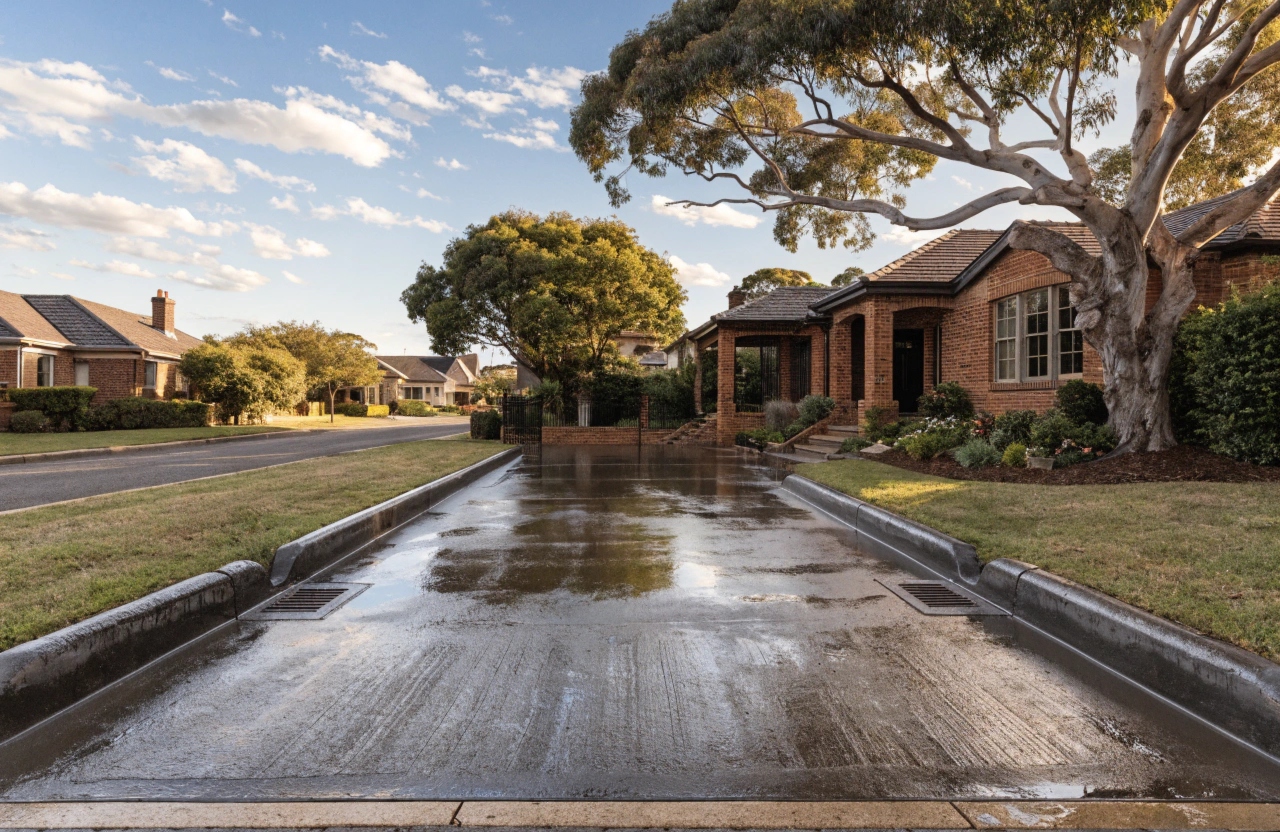
Ready mix trucks are heavy vehicles. A loaded transit mixer can weigh 30 tonnes or more, and that weight has real implications for site access — driveway width, overhead clearance, ground bearing capacity, and the turning radius required to get the drum close enough to the pour location all need to be considered before delivery day, not on it.
A site access problem discovered when the truck arrives is an expensive problem. Time spent manoeuvring, repositioning, or waiting while access is cleared is time the mix is sitting in the drum.
What We Consider When Planning Delivery Access
• Driveway and entry width — standard transit mixers require a clear width of approximately 3 metres; tighter access may require a smaller agitator truck where available
• Overhead clearance — powerlines, trees, and structure overhangs that sit below the chute height need to be identified in advance
• Ground bearing capacity — soft ground, recently disturbed fill, or sandy soils can compromise access for a loaded truck; temporary ground protection may be required
• Chute reach — a standard chute extends approximately 3–4 metres from the truck; pours beyond that range require the truck to reposition or concrete to be wheelbarrowed from the chute
When Direct Access Isn’t Possible
For sites where the truck cannot get close enough to the pour location — narrow inner-city blocks, elevated sites, or rear-of-block pours — concrete pump hire is the practical solution. A pump line can place concrete at distance and height that chute delivery can’t reach.
Discuss site access during the quoting process. It takes five minutes to plan and prevents a costly pour day complication.
Frequently Asked Questions — Ready Mix Concrete Supply Bendigo
For standard residential pours we recommend at least 48–72 hours notice where possible. Larger commercial or staged pours may require more lead time to coordinate delivery scheduling properly. The earlier you confirm your pour date, the better we can lock in your delivery window and mix specification.
If you’re unsure, call us before you order. Most residential applications — driveways, house slabs, garage floors — fall under 25MPa. Anything with a structural engineer’s specification will have the grade documented in the plans. We’re happy to talk through the application and confirm the right mix before the order is placed.
Give us as much notice as possible. A batched load that can’t be delivered creates a real cost — concrete can’t be returned to the plant once it’s mixed. Early communication on scheduling changes is always the right move.
Yes. We supply to properties across the Bendigo region including Marong, Axedale, Heathcote, Elmore, and surrounding areas. Delivery distance may affect pricing — discuss your location during the quoting process.
We can advise on pump hire options for sites where direct truck access isn’t possible. Raise the access situation during your quote and we’ll factor the right solution into the delivery plan.
Get Your Ready Mix Concrete Quote Today
Ready mix concrete supply in Bendigo doesn’t have to be complicated — but it does need to be right. The right mix grade, the right volume, delivered to a site that’s ready to receive it, on a schedule that fits your pour plan. That’s the service we provide to contractors, builders, and owner-builders across Bendigo and central Victoria.
Whether you’re pricing a house slab, coordinating a concrete driveway pour, ordering for footings, or supplying a large commercial floor, get in touch with our team before you lock in your pour date. We’ll confirm the mix specification, work through the volume calculation with you, and lock in a delivery window that fits your programme.
Call us or submit an enquiry online. Our team is ready to talk through your mix requirements, pour schedule, and site access — everything sorted before the truck leaves the plant.
