
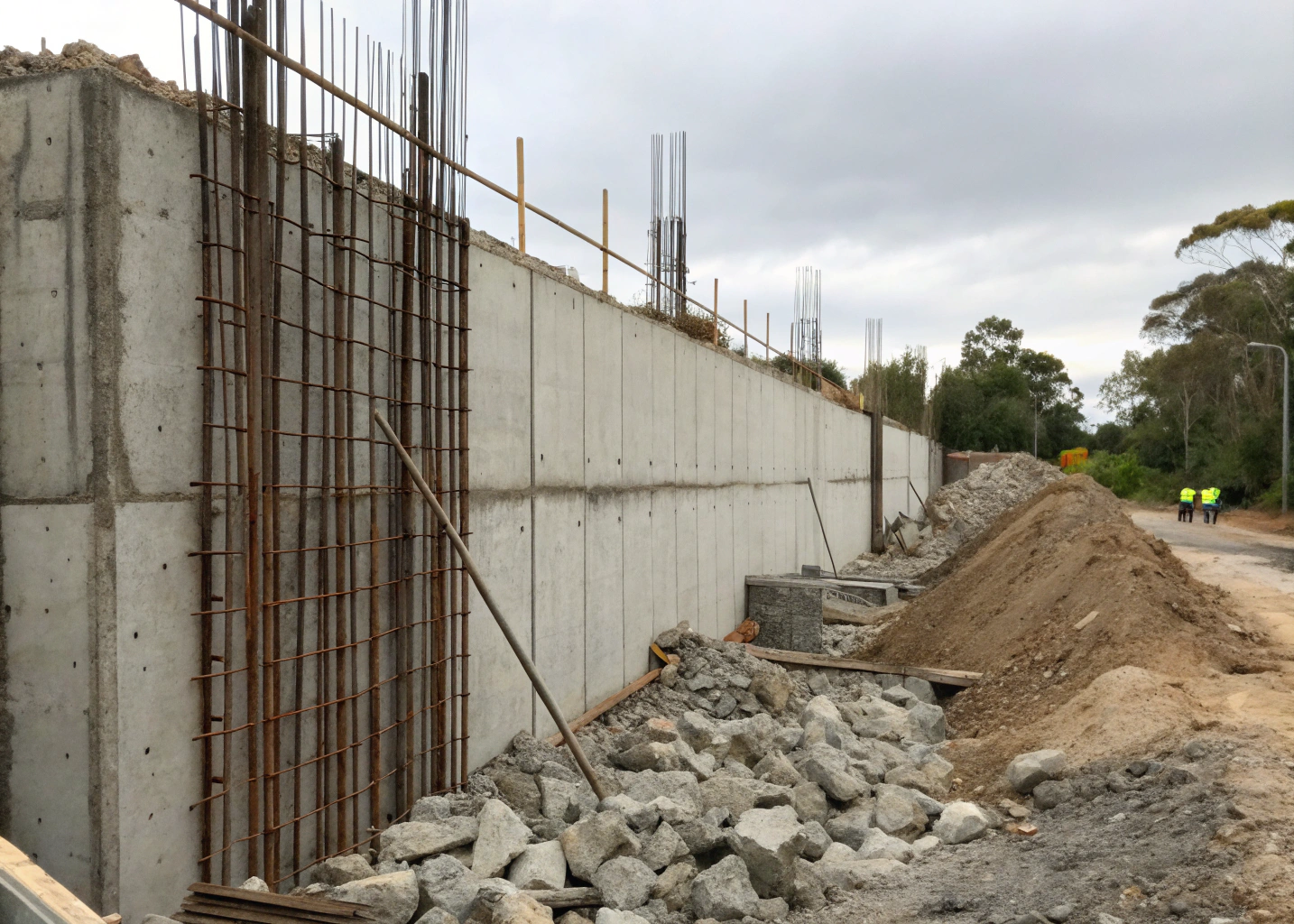
What Is Concrete Structure Demolition?
Concrete structure demolition is the planned, sequenced removal of substantial concrete elements — including walls, foundations, footings, columns, retaining structures, and stairs — using hydraulic excavators, breakers, and concrete saws.
Unlike slab or driveway removal, structural demolition requires an assessment of how the concrete behaves under load before breaking starts. Key considerations include:
- Sequencing — identifying which elements come out first to prevent uncontrolled collapse
- Load conditions — understanding what the structure is supporting or retaining before anything is disturbed
- Adjacent protection — isolating the demolition from retained structures, neighbouring properties, and underground services
- Site preparation — clearing voids, disturbed ground, and sub-surface remnants after removal so the site is ready for the next stage

Concrete Structure Demolition vs Standard Slab Removal
A flat slab sitting on the ground is a straightforward job. You break it, you load it, you remove it. There’s no load to worry about, no collapse risk, and no particular order you need to follow.
Structural concrete is a different situation. A standing wall, a retaining structure holding back tonnes of soil, a footing tied into the elements around it, a column carrying a beam above — these elements are under load. As you progressively break them, the forces they were carrying have to go somewhere. Remove the wrong piece first, or break without thinking about how that load transfers, and what’s left becomes unstable and unpredictable.
That’s why structural demolition sits in a different category to standard slab or driveway work. It requires a proper look at the structure before anything starts, a planned removal order, and people who know what they’re doing when structural concrete starts coming down.
Concrete Structures We Demolish Across Bendigo
We handle the full range of structural concrete demolition across residential, rural, and commercial projects in Bendigo and the surrounding region.
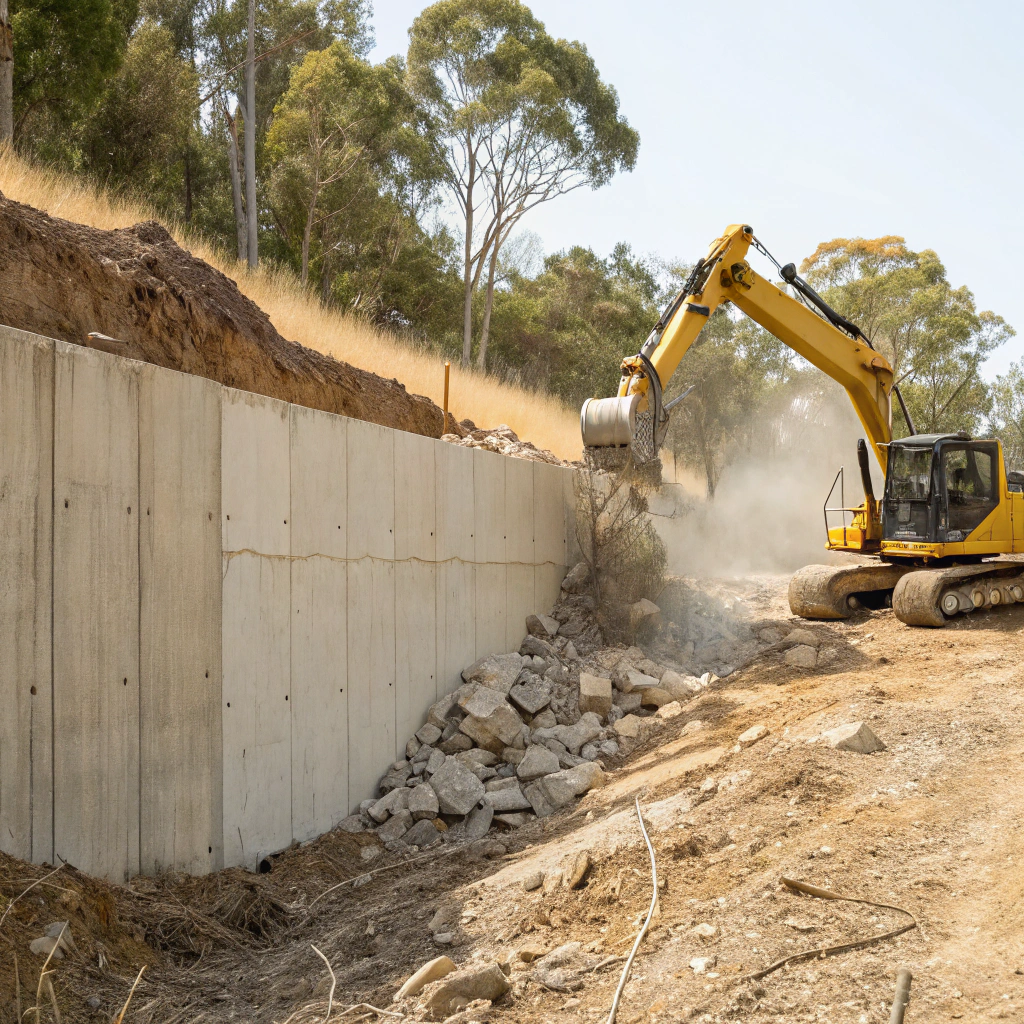
Concrete Retaining Walls: Retaining walls are actively holding back a soil mass. We assess the retained height and soil conditions first, then plan the removal sequence to manage soil exposure safely throughout the job.
Concrete Boundary and Garden Walls: Freestanding boundary and garden walls require controlled breaking to manage fall direction — particularly where the wall sits next to a neighbouring property or landscaping that’s staying.
Foundations and Footings: Footing removal is sub-surface work. The full extent isn’t always visible until excavation starts, so on-site decision making is part of the job.
Concrete Columns, Piers, and Stairs: Columns and piers carrying load above need careful assessment before anything is touched. We also remove external concrete staircases as part of residential renovations and facade upgrades.
Commercial Concrete Structures: We handle heavier structural elements across Bendigo’s commercial and industrial corridors — Kangaroo Flat, Eaglehawk, and Epsom — with larger equipment, detailed planning, and formal documentation.
Planning and Sequencing Your Structural Demolition
Planning is the most important part of any structural demolition job.
Equipment Used for Structural Concrete Demolition
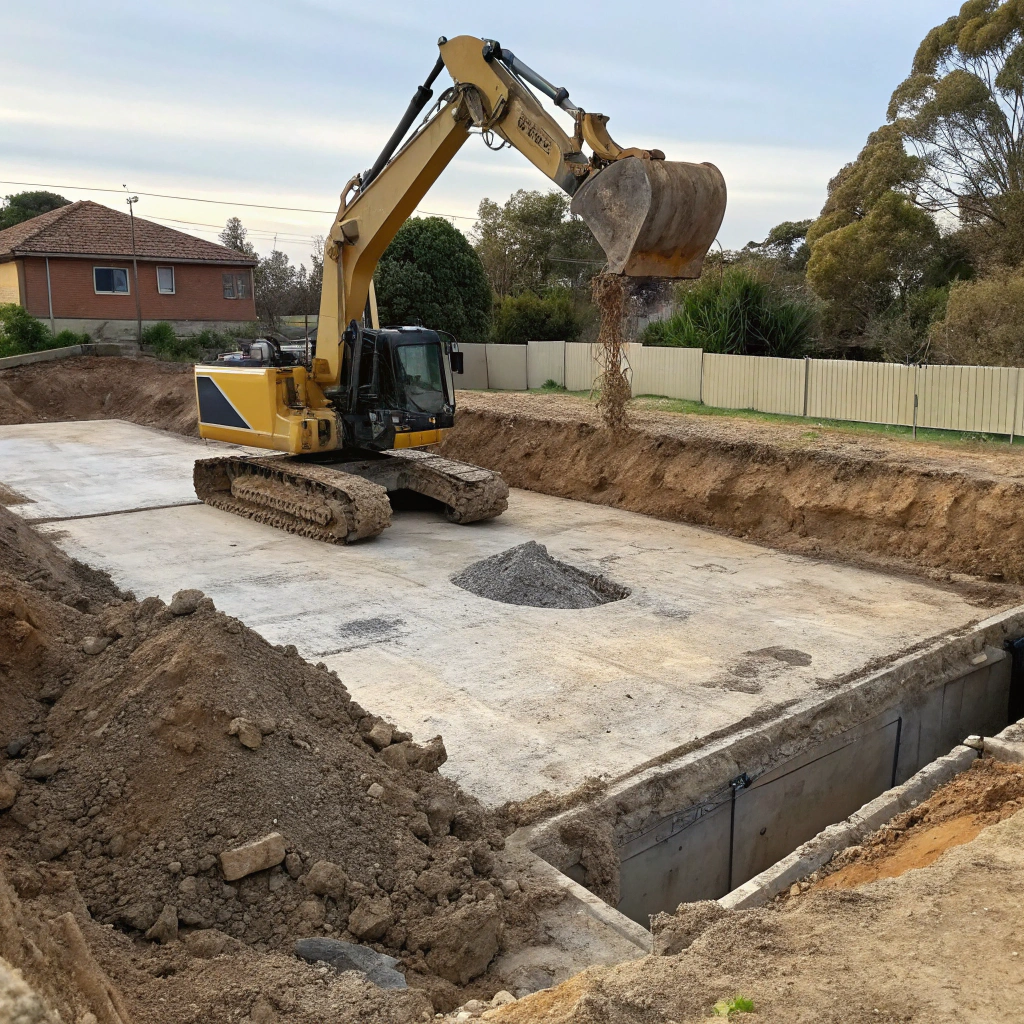
The primary tool for structural demolition is an excavator-mounted hydraulic breaker. It delivers the force, reach, and controlled positioning needed to break substantial concrete elements safely from a stable platform — something handheld equipment simply can’t match on structural work.
Concrete saws and angle grinders are used for controlled cutting — managing the direction and extent of breaking, and isolating the demolition from retained elements nearby. Where access is tight or precision matters more than volume, handheld hydraulic breakers give us the control we need in confined spaces.
Structural demolition also requires more space and logistical planning than standard slab work. Vehicle access, equipment positioning, and site setup are all worked out before breaking starts — because the wrong setup on a structural job creates problems that are difficult to fix once you’re mid-job.
Managing Adjacent Structures and Underground Services
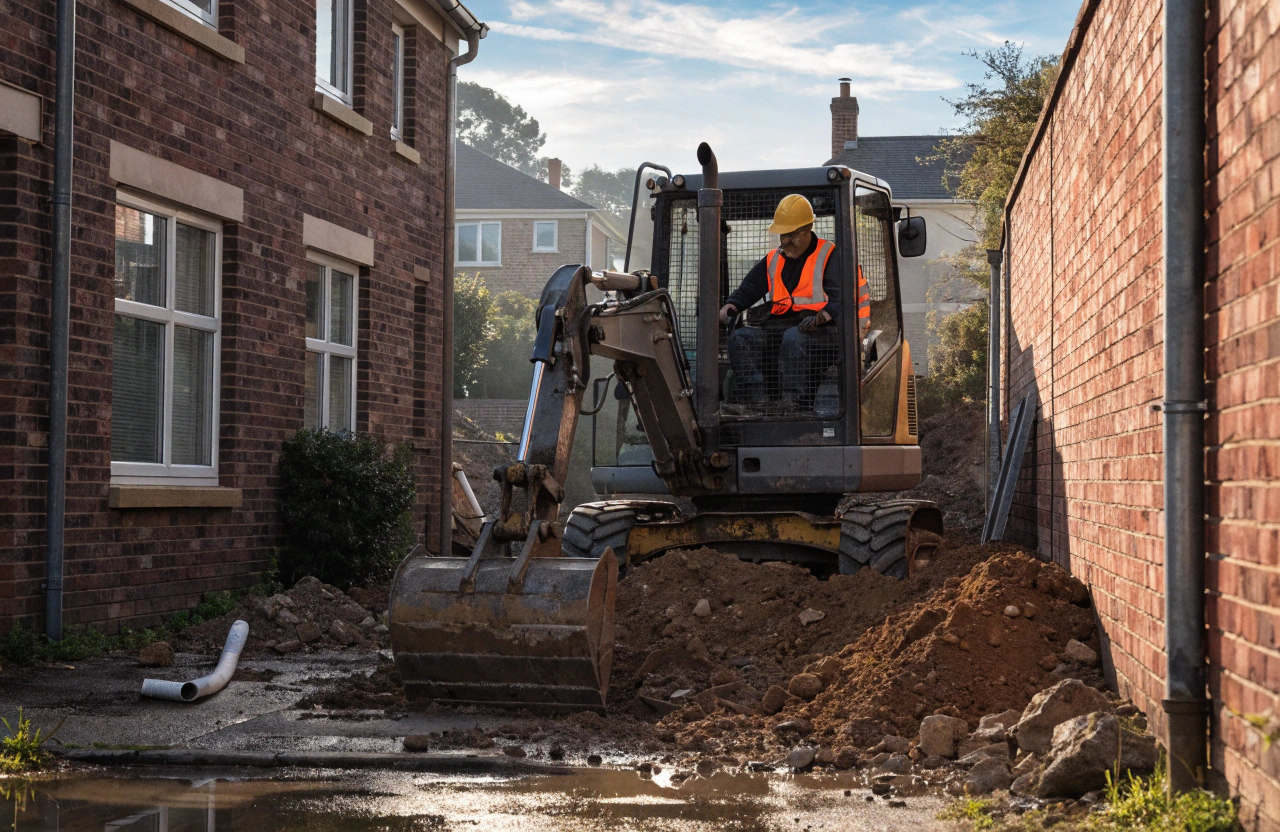
Structural concrete is rarely isolated. Walls sit on boundaries, foundations adjoin other footings, and services run beneath and alongside the structures being removed.
Protecting Adjacent Buildings and Boundaries: We saw cut to isolate the demolition from retained structural elements, manage the fall zone carefully during wall and column removal, and use vibration monitoring where proximity to sensitive structures warrants it. Where needed, temporary hoarding or protection goes up before breaking starts. This is standard practice on every job, not an optional extra.
Underground Services and Site Clearance: Gas, water, electrical, and telecommunications infrastructure can run beneath or alongside structural foundations and footings. We run the Dial Before You Dig process and use service locating as part of pre-demolition planning. Sub-surface surprises are common in established Bendigo residential and commercial areas — identifying services before breaking starts is non-negotiable on structural demolition work.
Reinforcement, Debris, and Responsible Site Clearance
Structural concrete elements contain significantly more reinforcement steel than standard slabs. Foundations, retaining walls, and columns generate substantial volumes of steel alongside concrete rubble when they come down. We separate the steel and concrete streams on site, cut and manage the steel for removal, and process concrete rubble for recycling where possible. Everything comes off the site cleanly.
Post-demolition site condition matters just as much as the demolition itself. Structural work leaves voids where foundations sat, disturbed ground around retaining wall bases, and sub-surface remnants that need to be addressed before new construction can proceed. A site that looks cleared on the surface but has voids and loose material below is not a site that’s ready to build on.
We manage the full clearance and site preparation scope — not just the visible structure above ground. When we’re done, the site is properly cleared, the ground is ready, and the next stage of work can start without dealing with what we left behind.
Permits and Regulatory Requirements for Structural Demolition in Victoria
Demolition of substantial concrete structures in Victoria may require a demolition permit from the relevant local authority — in Bendigo’s case, the City of Greater Bendigo — depending on the structure type, size, and proximity to boundaries and other buildings. WorkSafe Victoria requirements also apply to demolition work, and notification obligations may apply for certain structure types.
We’re experienced in understanding these requirements and can advise on what approvals may be needed before work starts. You shouldn’t have to work out the permit process on your own — that’s part of what we bring to the job.
Getting the regulatory groundwork right before breaking starts avoids delays and compliance issues mid-job. We sort this out at the planning stage so the project moves when it’s supposed to.
Frequently Asked Questions
It depends on the structure type, size, and proximity to boundaries and other buildings. We assess this as part of our planning process and advise you on what’s needed before work starts.
We assess the structure before anything starts — what it’s carrying, what it’s retaining, and how it connects to everything around it. From there we work out the removal sequence that keeps the job safe and controlled from start to finish.
We plan around what’s on both sides before breaking starts. Where needed, we saw cut to isolate the demolition, manage fall zones carefully, and put temporary protection in place. Protecting adjacent properties is part of the job, not an afterthought.
Yes. We separate the concrete and steel on site, load everything out, and process concrete rubble for recycling where possible. We don’t leave material behind.
We plan the sequence specifically to manage soil exposure progressively as the wall comes down. The approach depends on the retained height and soil conditions, which we assess before any breaking starts.
Yes. We work across residential, rural, and commercial projects throughout Bendigo and the surrounding region. Commercial jobs get larger equipment, detailed planning, and formal quoting and documentation.
We manage the full clearance — including voids left by foundations, disturbed ground, and any sub-surface remnants. The site is properly prepared and ready for the next stage of work when we’re done.
Get a Free Site Assessment and Quote
Every structural demolition job starts with a site visit. We come out, look at the structure, advise on the demolition approach and sequencing, and let you know if any permits are needed — all before any commitment is made on your end.
Call us or send through an enquiry and we’ll get you booked in.
Call Concrete Bendigo Pro: 03 4420 4792
Local Bendigo business — Licensed and insured — Free site assessment
