
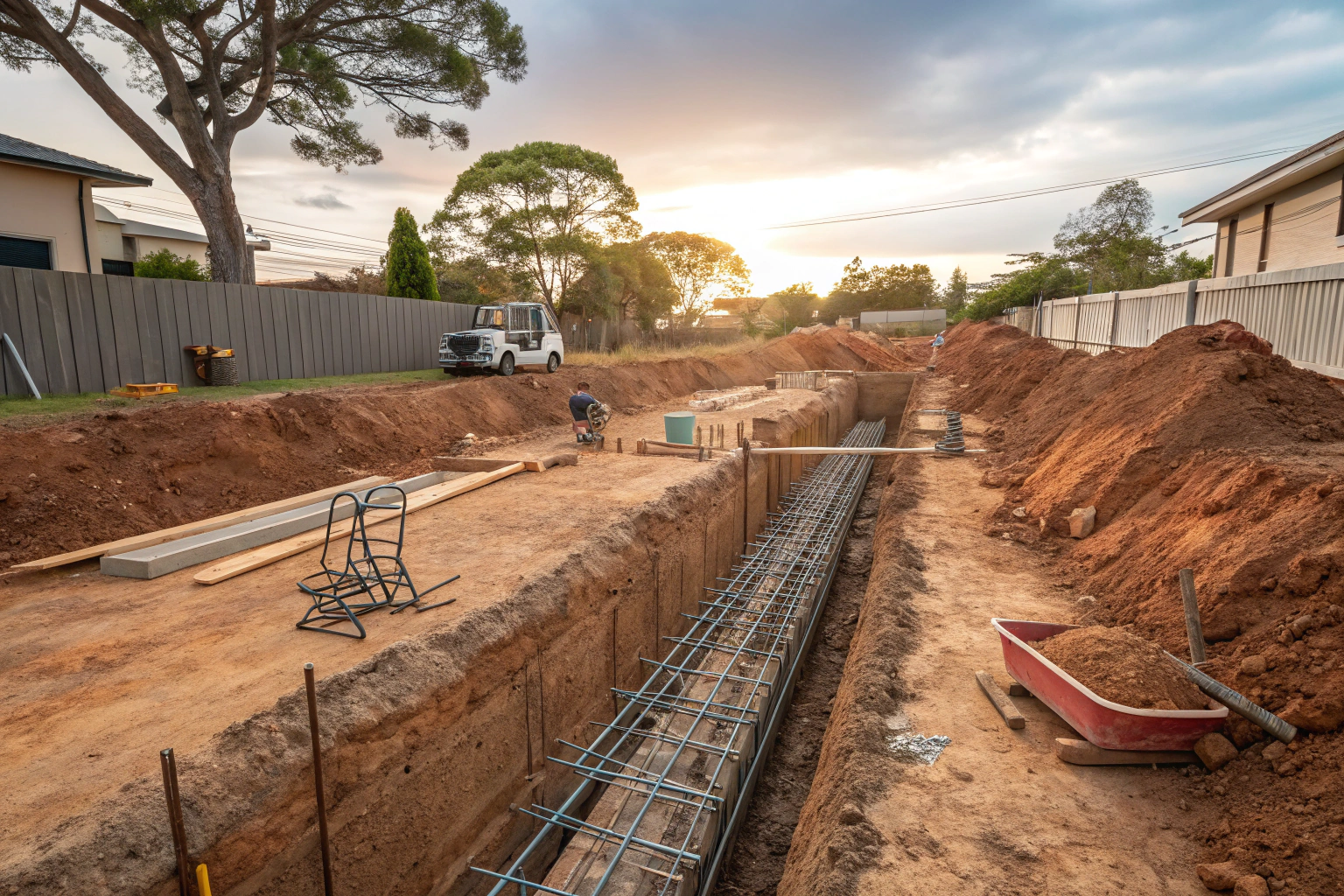
Concrete Footings Built to Hold Bendigo’s Toughest Ground
Concrete footings in Bendigo have to deal with conditions that test every part of the install — reactive clay that swells and shrinks through the seasons, summer heat pulling moisture out of the ground, winter wet softening the soil profile, and sites that range from flat suburban blocks through to sloping hillside builds out toward Eaglehawk and beyond. A footing that hasn’t been designed for what’s actually under it won’t last, no matter how good the structure on top looks.
Our team pours footings built specifically for the ground they’re going into. We assess the site, work from soil reports and engineer drawings where they apply, and match the footing type, depth, reinforcement, and concrete strength to what the conditions actually demand. Reactive clay gets a deeper or wider footing. Sloping sites get stepped or piered solutions. Stable ground gets a properly dimensioned standard footing without over-engineering the cost. Every footing we pour is built for the block it’s going on — not a one-size-fits-all approach that fails the job later.

Concrete Footing Services in Bendigo: We Handle
Concrete footings are the structural base that transfers the load of a building or structure straight down into the ground,— and without them done right, nothing built on top has a stable platform to sit on. Our Bendigo team handles the full range of footing work for residential, commercial, and civil projects across the region, matching the footing type to the load above and the soil conditions below. We work from soil reports and engineer drawings where required, and we know how to read Bendigo’s varying ground — from reactive clay through to harder compacted soils out toward Marong, Axedale, and Heathcote. Every footing we pour is built to meet the National Construction Code and the relevant Australian Standards, so you’re never left wondering whether it’ll pass inspection.
Here’s the footing work we handle across Bendigo and the surrounds:
- Strip footings for walls, fences and extensions
- Pad footings for pergolas, decks and carports
- Pier footings for reactive soil sites
- Raft slabs and waffle pod footing systems
- Footings for sheds, outbuildings and carports
- Footings for retaining walls and boundary walls
- Footings for pergolas, alfrescos and outdoor structures
- Commercial and civil concrete footings in Bendigo
Why Concrete Footings Are the Most Important Stage of Any Build
Footings get poured, covered up, and forgotten about — but every wall, post, slab, and structure built above them depends entirely on how well that stage was done. A correctly designed and installed footing transfers the full weight of the structure evenly into the ground, holds steady through soil movement, and gives the building a solid platform to last for decades. Get it wrong, and the consequences show up later as cracks running through walls, doors that won’t close properly, slabs that tilt, and remediation bills that dwarf what proper footings would have cost in the first place.
The footing stage is where the following has to be right:
- Footing type matched to the structure and soil
- Depth and width specified for the load above
- Steel reinforcement was placed and tied correctly
- Concrete strength appropriate for the application
- Curing conditions managed before anything goes on top
Once the slab is poured or the framing goes up, you can’t go back and fix the footings without tearing the whole structure apart. That’s why this stage gets done the first time properly — there’s no second chance later.
Steel Reinforcement and Concrete Strength Done Right
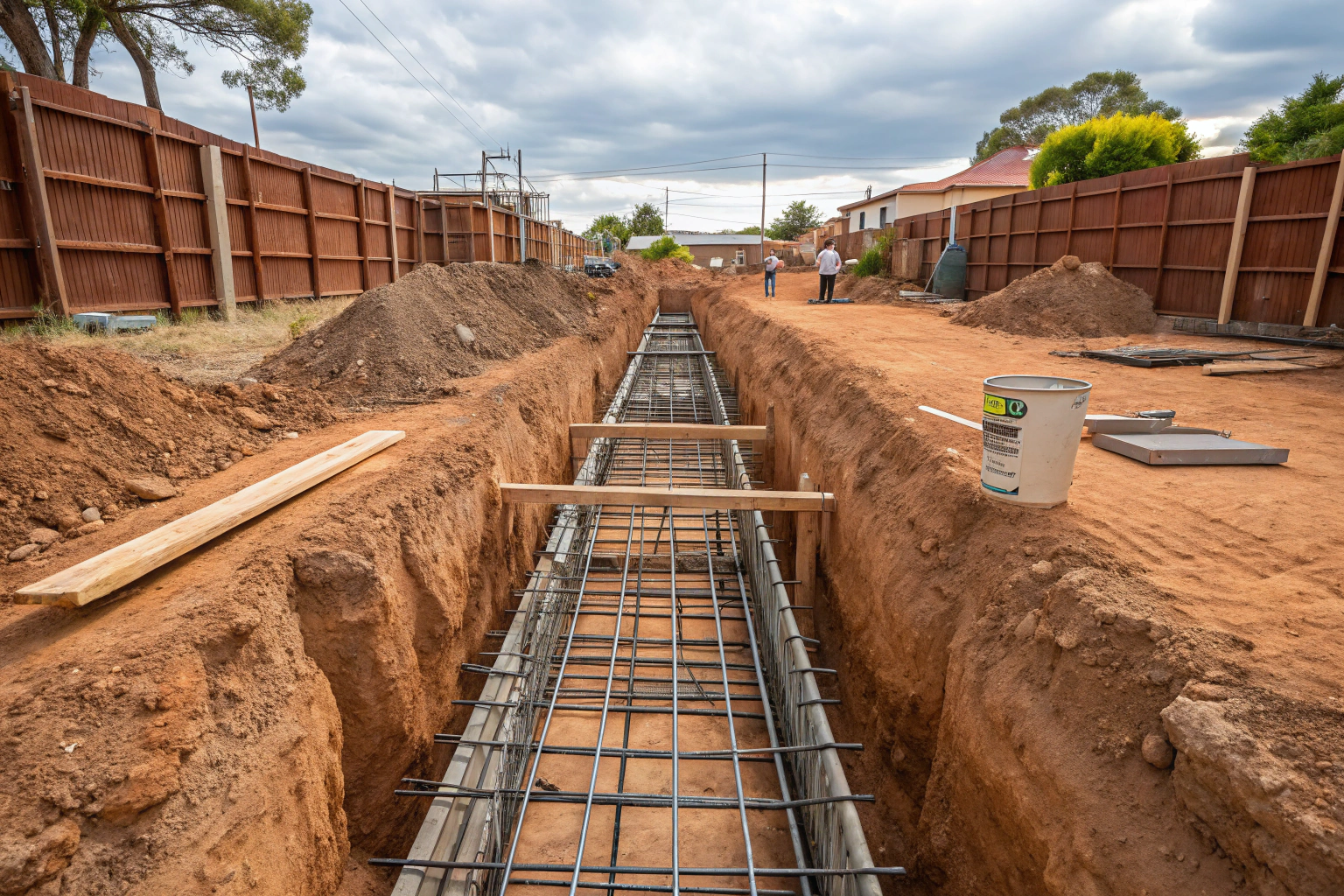
A concrete footing without proper steel reinforcement is just a slab of concrete waiting to crack. The steel is what gives the footing its tensile strength — concrete handles compression beautifully, but it needs reinforcement to resist the pulling, bending, and twisting forces that come from soil movement and structural load. Get the rebar size, placement, and tie spacing right, and the footing works as a single engineered unit. Get it wrong, and you’ve got a weak point built straight into the foundation.
We size and place reinforcement to match the engineer’s specification or the standard requirements for the footing type, with proper bar chairs holding the steel at the correct height inside the pour. Concrete strength matters just as much — different footing applications call for different concrete grades, and we pour to the spec the job actually needs, not whatever’s easiest. Correct concrete mix and reinforcement are the two factors that decide whether a footing performs for forty years or starts moving in five.
Soil Classification and Footing Depth Across Bendigo
Bendigo’s ground isn’t uniform — soil conditions shift considerably across the region, and the footing that suits a block in Strathdale might be wrong for one in Maiden Gully or out toward Heathcote. Soil classification is the system that sorts ground conditions into categories — Class A through Class P — based on how reactive the soil is to moisture changes. The more reactive the soil, the deeper or wider the footing has to be to handle the movement without transferring stress into the structure above.
Reactive clay soils common across parts of central Victoria expand when wet and shrink when dry, putting cyclical pressure on anything sitting on top. A footing designed for stable, low-reactivity ground will fail in reactive clay — it’s that straightforward. We work from the soil report for the site where one’s been done, and where engineer specifications apply, we pour to those drawings exactly. For smaller jobs, we draw on local experience to advise on appropriate footing depth and dimensions for the conditions we find on the ground.
Concrete Footings for Sloping and Hillside Sites in Bendigo
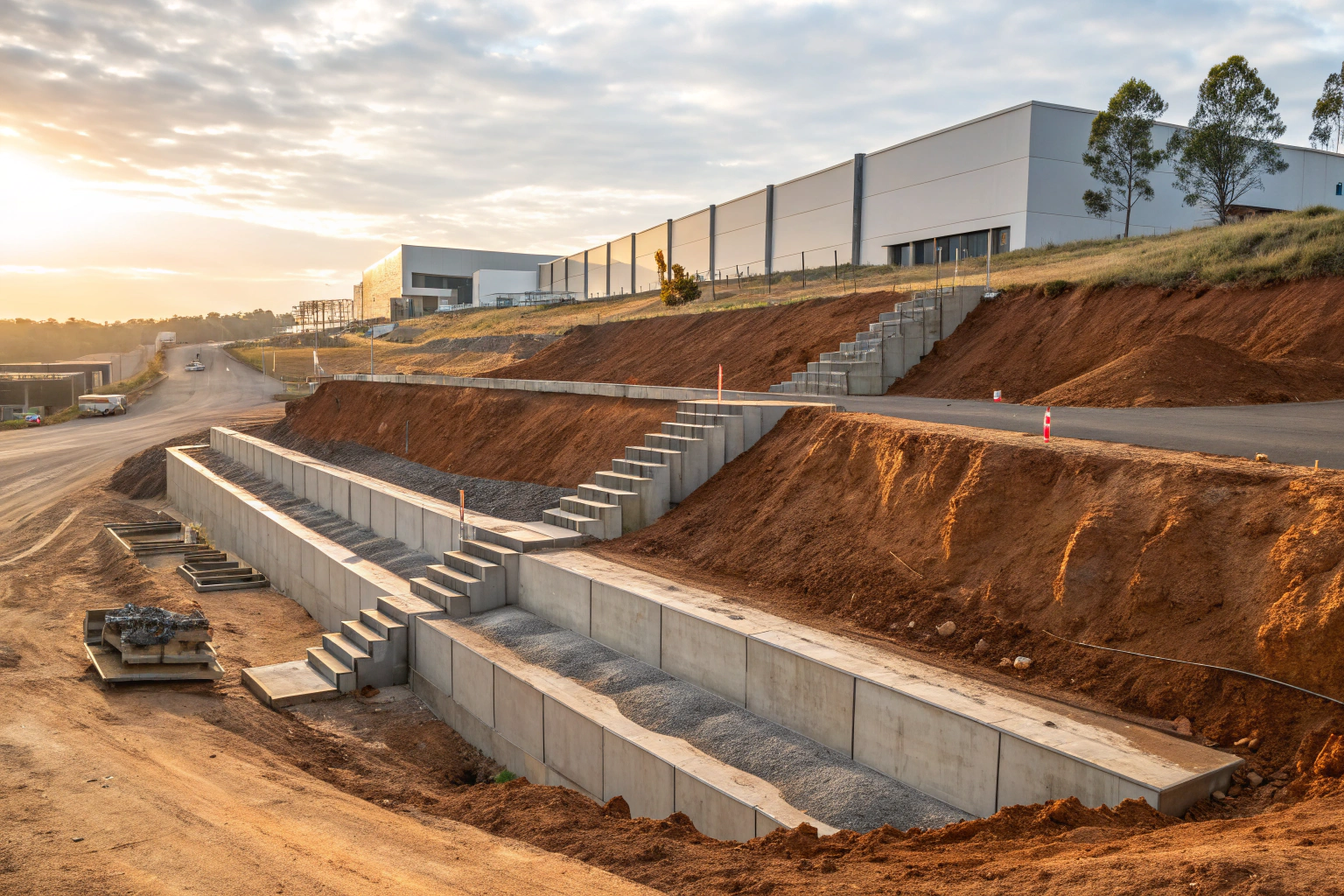
Sloping and hillside sites add a layer of complexity that flat-block footings simply don’t have to deal with. The footing has to hold the structure level on uneven ground, resist the lateral pressure of soil wanting to move downhill, and account for drainage that runs across or under the build. Get any of these wrong, and the structure above starts shifting within a few seasons.
We’ve poured footings on sloping blocks across Bendigo and the surrounds — from gentle gradients through to genuinely steep sites. Stepped strip footings, deeper pier footings, and engineer-designed solutions all come into play depending on the slope and the soil. Drainage planning gets handled at the same time, because water moving through a sloping site is what causes most hillside footing failures down the track. Sloping and hillside footings done properly mean the build sits level, stays put, and doesn’t need remediation work later when the ground decides to move.
Concrete Footings That Meet Australian Standards
Concrete footings for habitable structures in Bendigo aren’t optional in their compliance — they have to meet the requirements set out in the National Construction Code and the relevant Australian Standards covering residential slabs, footings, and structural concrete work. These standards exist because footings are load-bearing and life-safety critical. Skip the spec, cut the depth, or shorten the reinforcement, and the structure above is sitting on something that won’t perform the way it’s supposed to.
Every footing we pour gets done to the standard the project calls for — whether that’s a straightforward strip footing for a fence, a pad footing for a pergola post, or a fully engineered footing system for a new home or commercial build. Where engineer drawings apply, we follow those drawings exactly, with reinforcement placed and concrete strength matched to spec. Inspections get passed without back-and-forth because the work is right the first time. Builders and homeowners get the documentation and confidence they need that the footing stage is fully compliant and signed off properly.
What Happens When Concrete Footings Are Done Poorly
Poorly installed concrete footings don’t usually fail straight away — they fail quietly, over months and years, in ways that get expensive fast. The first signs show up as hairline cracks in walls, doors that start sticking, gaps appearing between skirting and floors, and tiles cracking through grout lines. By the time these symptoms are obvious, the damage underneath has already been compounding for a long time.
Common footing failures come down to the same handful of mistakes — footings poured too shallow for the soil class, reinforcement missing or placed incorrectly, concrete strength too low for the load above, footings poured on uncompacted ground, or no allowance made for reactive soil movement. The result is differential settlement, where parts of the structure drop or shift while other parts stay put, putting stress straight through walls, slabs, and frames.
Fixing footing failures after the build is finished means underpinning, slab jacking, or, in the worst case, a partial demolition. Doing footings properly the first time costs a fraction of what remediation does later.
Frequently Asked Questions
Footing depth in Bendigo depends on the soil classification, the load above, and the engineer’s specification where one applies. Reactive clay soils common across the region typically require deeper footings than stable ground to handle seasonal movement properly.
Strip footings run continuously beneath walls, fences, and extensions to spread the load along their length. Pad footings are isolated concrete pads supporting individual posts for pergolas, decks, carports, and similar structures where loads are concentrated at specific points.
Engineer specifications are required for new homes, larger extensions, sloping sites, and any structure with a significant structural load. Smaller projects like fences or pergolas on stable ground can usually proceed under standard footing requirements without engineering input.
Reactive clay soils require deeper or wider footings, additional reinforcement, and sometimes pier footings drilled below the active soil layer. The extra depth, steel, and concrete volume needed to handle soil movement adds materially to the footing cost.
A footing transfers load into the ground beneath a structure, while a slab is the horizontal concrete surface forming the floor. In waffle pod and raft slab systems the two work together as a single integrated unit handling both functions.
Get a Free Quote on Concrete Footings in Bendigo
If you’re starting a build, planning an extension, or putting in any structure that needs a solid base under it, get in touch before the work begins. We’ll come out, assess the site conditions, look at the soil and any engineer drawings you’ve got, and give you straight advice on the right footing type, depth, and specification for the job. Free quotes with no pressure and no surprises later.
Builders, owner-builders, and homeowners across Bendigo and the surrounds work with us because the footing stage gets done the first time properly. Give us a call or send through the project details, and we’ll take it from there.
