
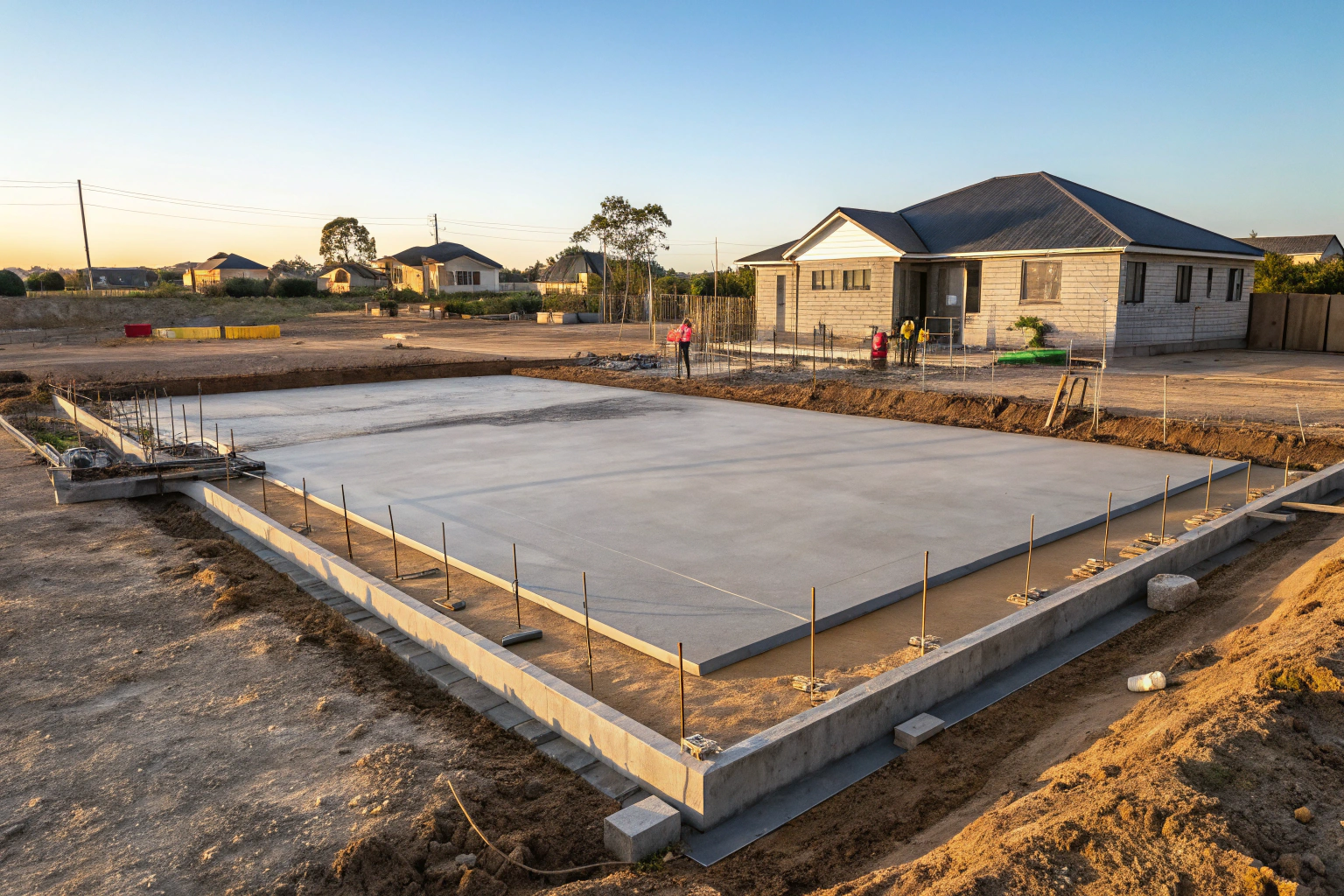
Why the House Slab Stage Makes or Breaks a New Home Build
Every trade that works on a new home — framers, floor layers, cabinet makers, tilers — starts from the slab. If it’s level, they can do their job properly. If it’s not, every stage that follows carries the consequences forward.
A house slab isn’t just a flat piece of concrete. It’s a structural element engineered to carry the full load of the home above while managing what the ground below is doing. In Bendigo, where reactive clay soils shift with the seasons and temperature swings push well past the Victorian average, that structural role is genuinely demanding. The slab has to perform in both directions — holding the building up and bridging the ground movement beneath it.
When the slab is poured correctly — right mix, right reinforcement, right finish — the build that follows is cleaner, faster, and far less likely to throw up problems at lock-up or handover. Walls sit plumb. Floors sit level. Frames go up the way they’re supposed to.
That’s the outcome every builder and homeowner deserves from day one.

Types of House Slabs We Install in Bendigo
Waffle Pod Slabs
The waffle pod slab is the most common house slab system used across Victoria and the standard specification for the majority of project and custom home builds in Bendigo. It consists of a reinforced concrete grid supported on polystyrene void formers — the pods — that create a waffle pattern on the underside of the slab. The pod layout creates a series of stiffening ribs running in both directions, and it’s this ribbed grid that gives the slab its structural performance under load and across ground movement.
Waffle pod systems are well-suited to reactive soil conditions, efficient to set out, and the specification most Bendigo building surveyors and engineers default to for residential construction on standard allotments.
Raft Slabs
A raft slab is a flat reinforced concrete slab of consistent thickness poured directly onto a prepared sub-base. Rather than a ribbed grid, the structural performance comes from the slab acting as a continuous flat plate. Raft slabs are typically specified where site conditions, structural requirements, or soil classifications suit a continuous system over a waffle pod arrangement — including some rural and semi-rural allotments in the Bendigo surrounds where ground preparation and drainage conditions differ from standard suburban blocks.
Concrete Strength Specifications for Bendigo House Slabs
The concrete mix used in a house slab isn’t a one-size-fits-all decision — it’s specified by the structural engineer based on the site’s soil classification and the slab design. For most residential house slabs in Bendigo, the engineer will specify either 25MPa or 32MPa concrete, with the higher strength grade typically called for on sites with more reactive soil classifications or where the slab design demands greater structural performance.
The specification matters because:
- Concrete strength directly affects the slab’s ability to resist cracking under load and ground movement
- The mix design determines workability — how the concrete behaves during the pour and finishing window
- Higher MPa specifications are increasingly common across Bendigo’s reactive clay corridors in areas like Strathdale, Epsom, and Maiden Gully
We work with reliable local concrete suppliers to make sure the correct mix arrives on site, in the right volume, and within the timeframe the pour requires. A large house slab is often a continuous pour — once it starts, it needs to be completed efficiently and consistently. Getting the supply coordination right is part of delivering a slab that meets the engineer’s specification from edge to edge.
Slab Flatness and Finish Tolerances — Why They Matter for the Frame
A house slab can be structurally sound and still cause problems if the surface finish isn’t right. Flatness and level tolerances directly affect every trade that follows — framers, floor layers, cabinet installers, and tilers all work from the slab surface, and even small deviations compound quickly once the build is underway.
Wall frames that sit on an uneven slab don’t go up plumb. Internal flooring systems that start from a surface outside tolerance create problems that are expensive to fix once the build is at lock-up. Getting the finish right at the slab stage is far cheaper than correcting it later.
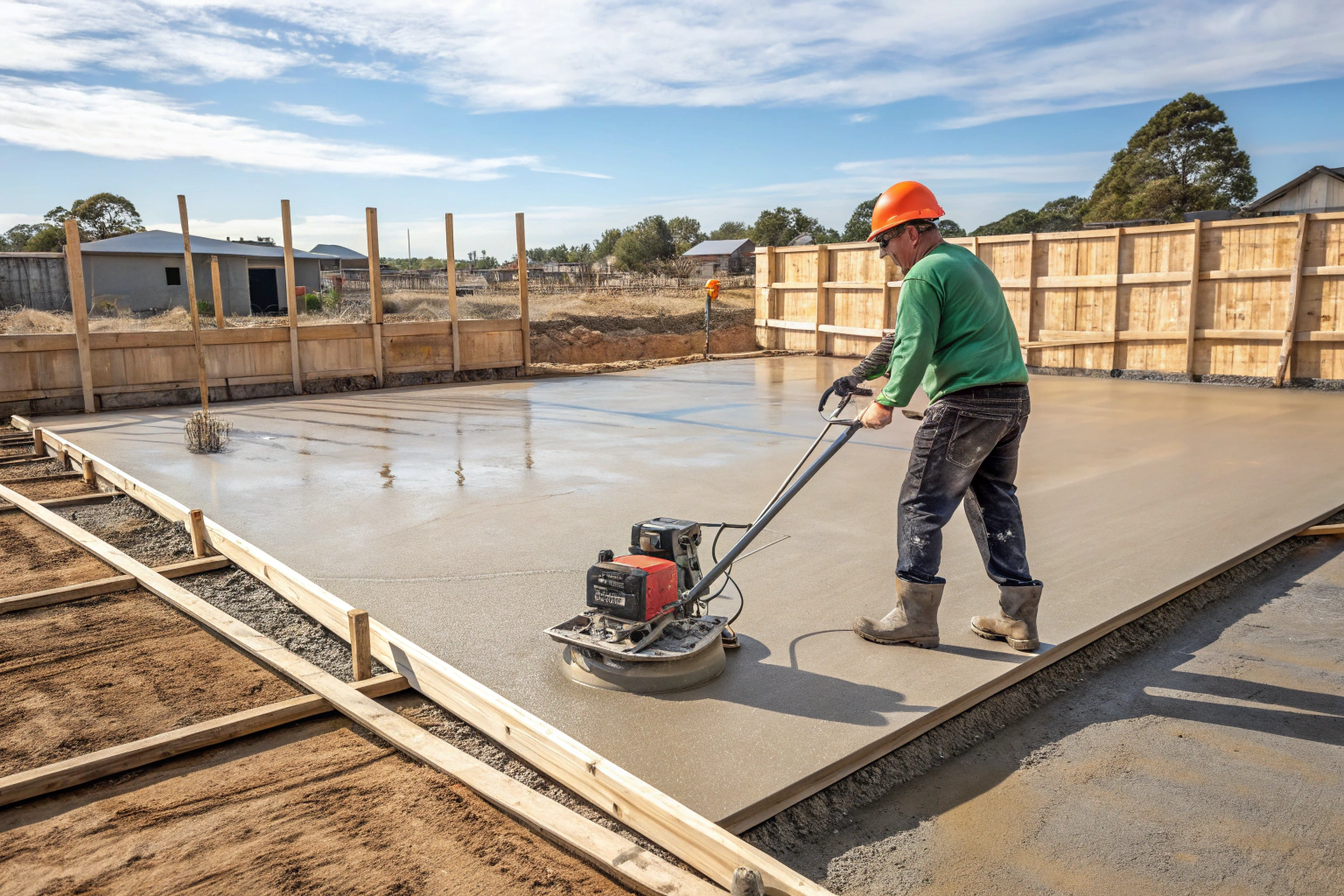
Our team uses appropriate finishing equipment and techniques across the full slab area to achieve the level and flatness tolerances the construction requires. On larger slab footprints — common on the wider allotments found through Maiden Gully, Strathdale, and the rural lifestyle blocks surrounding Bendigo — consistent finishing across the entire surface is where experience counts.
Bendigo’s Soil Conditions and Why They Shape Every Slab We Pour
Bendigo sits on some of central Victoria’s most reactive clay soils — ground that swells when it gets wet and contracts when it dries out. Across growth corridors like Strathdale, Epsom, and Maiden Gully, and through the established suburbs of Kangaroo Flat and White Hills, reactive soil movement is a constant structural consideration for any concrete slab poured at ground level.
What makes Bendigo’s conditions particularly demanding is the combination of factors working together:
- Hot, dry summers that regularly push past 38°C draw moisture out of the soil and cause contraction
- Cold winters with frost cycles drive expansion and ground movement in the opposite direction
- Seasonal moisture variation across clay profiles creates differential movement — the ground doesn’t move evenly across a slab footprint
A house slab designed for these conditions has to be engineered to bridge that movement, not just sit on top of it. That’s why every house slab we pour in Bendigo is worked to a structural engineer’s drawings based on a site-specific soil report — because the ground beneath every allotment tells its own story.
The Foundation Every Bendigo Home Deserves — Starting With the Slab
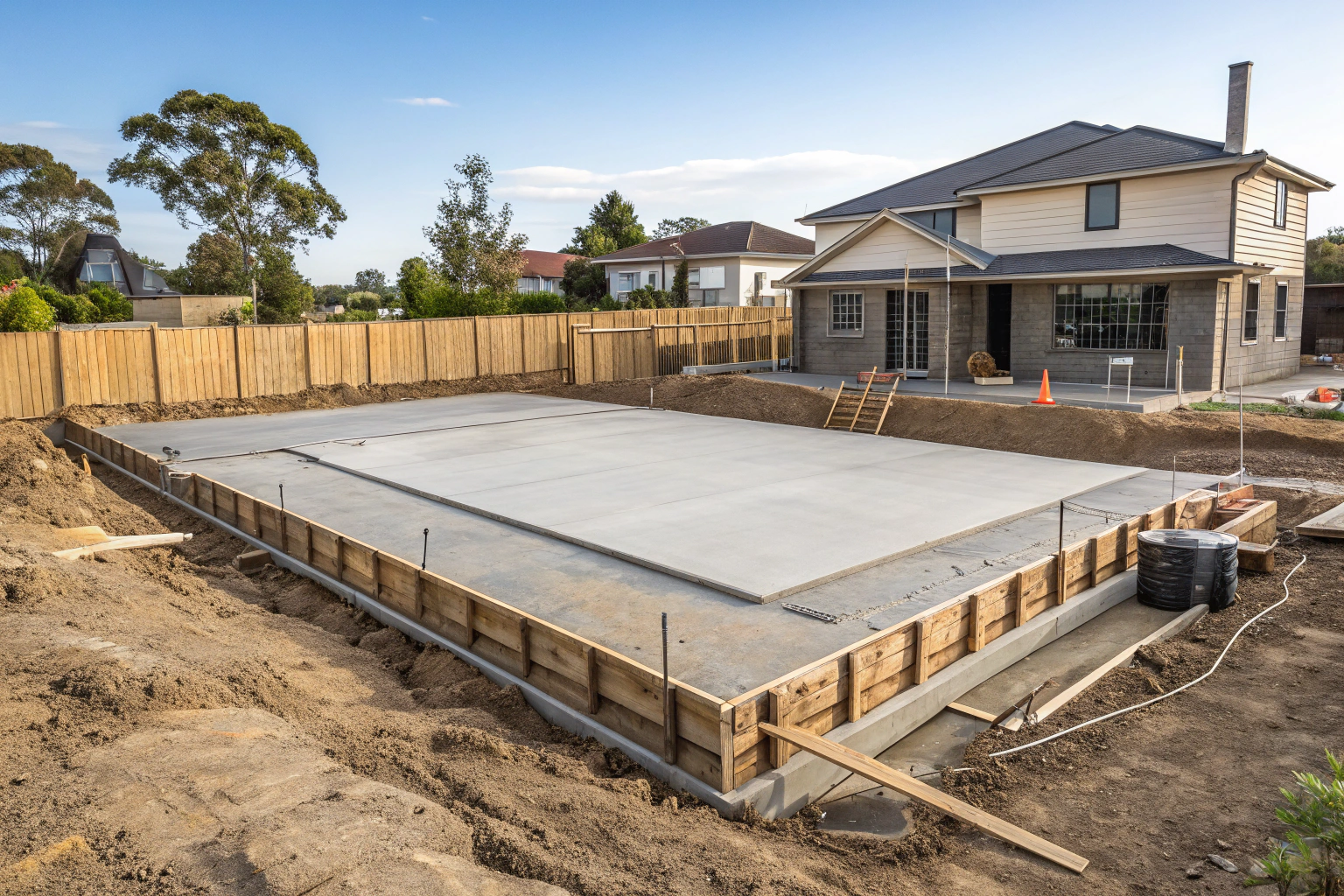
Every new home built in Bendigo starts with a slab, and that slab sets the standard for everything that follows. It’s the platform the frame sits on, the surface the floors finish to, and the structural element that has to perform reliably across decades of seasonal ground movement, temperature extremes, and the full load of the home above it.
When the slab is right, the build runs the way it should. Trades arrive at a level, clean surface and get on with their work. The programme stays on track. The homeowner gets a finished product that reflects the investment they’ve made.
That’s what we deliver on every house slab project across Bendigo — from the first homes going up in the outer growth corridors through to infill builds in the established suburbs. Engineer-specified. Correctly reinforced. Finished to tolerance. A foundation that the home above it can rely on for the life of the building.
From Site Prep to Curing — The Full House Slab Process in Bendigo
A house slab pour is the result of several sequential stages, each one setting up the next. Here’s what the full process looks like on a Bendigo residential build:
- Site preparation and levelling — the sub-base is prepared and graded to the engineer’s specified levels before anything else begins
- Termite management system installation — where required by the building surveyor, termite protection is installed at this stage.
- Formwork setup — perimeter formwork is set to the engineer’s slab dimensions and level
- Pod layout — for waffle pod systems, polystyrene void formers are positioned according to the specified grid pattern
- Steel reinforcement placement — all reinforcement is installed according to the engineer’s drawings, including mesh, bar, and any edge beam steel.
- Pre-slab inspection — the building surveyor inspects the setup before any concrete is placed. We coordinate this as a standard part of the process
- Concrete pour — often a large continuous pour, coordinated with the concrete supplier for volume and timing
- Surface finishing — the slab is finished to the required level and flatness tolerances across the full area
- Curing — the slab is cured correctly to achieve the specified concrete strength before the frame stage begins
Frequently Asked Questions — House Slabs in Bendigo
Most residential house slabs are completed in a single day. The pour itself is continuous once it starts. Curing takes several days before the slab is ready for the frame stage to begin.
Yes. In Victoria, a site-specific soil report is required before a structural engineer can design your house slab. The soil classification determines the slab type, reinforcement layout, and concrete strength specification for your block.
A waffle pod slab uses polystyrene void formers to create a reinforced rib grid. A raft slab is a flat continuous slab of consistent thickness. Your engineer specifies which system suits your site’s soil classification and conditions.
Most residential house slabs in Bendigo are poured in 25MPa or 32MPa concrete. The engineer’s drawings specify the required strength based on your site’s soil report and slab design requirements.
A correctly engineered and poured slab is designed to manage reactive soil movement. The engineer’s specification accounts for your site’s soil classification so the slab bridges ground movement rather than transferring it into the structure above.
Talk to Our Team Before Your Build Reaches the Slab Stage
The house slab stage moves quickly once the build programme kicks into gear. Getting in touch early means we can review your engineer drawings, ask the right questions about your site, and have a detailed quote ready well before the slab date arrives — so there’s no scramble when the programme reaches that point.
We work with homeowners, owner-builders, and builders across Bendigo and the surrounding areas. Whether your project is months away or coming up fast, reach out today and talk to a team that knows Bendigo’s soil conditions, works to engineer specifications, and delivers house slabs that give every build the start it deserves.
Call us or submit an enquiry for a free quote.
