
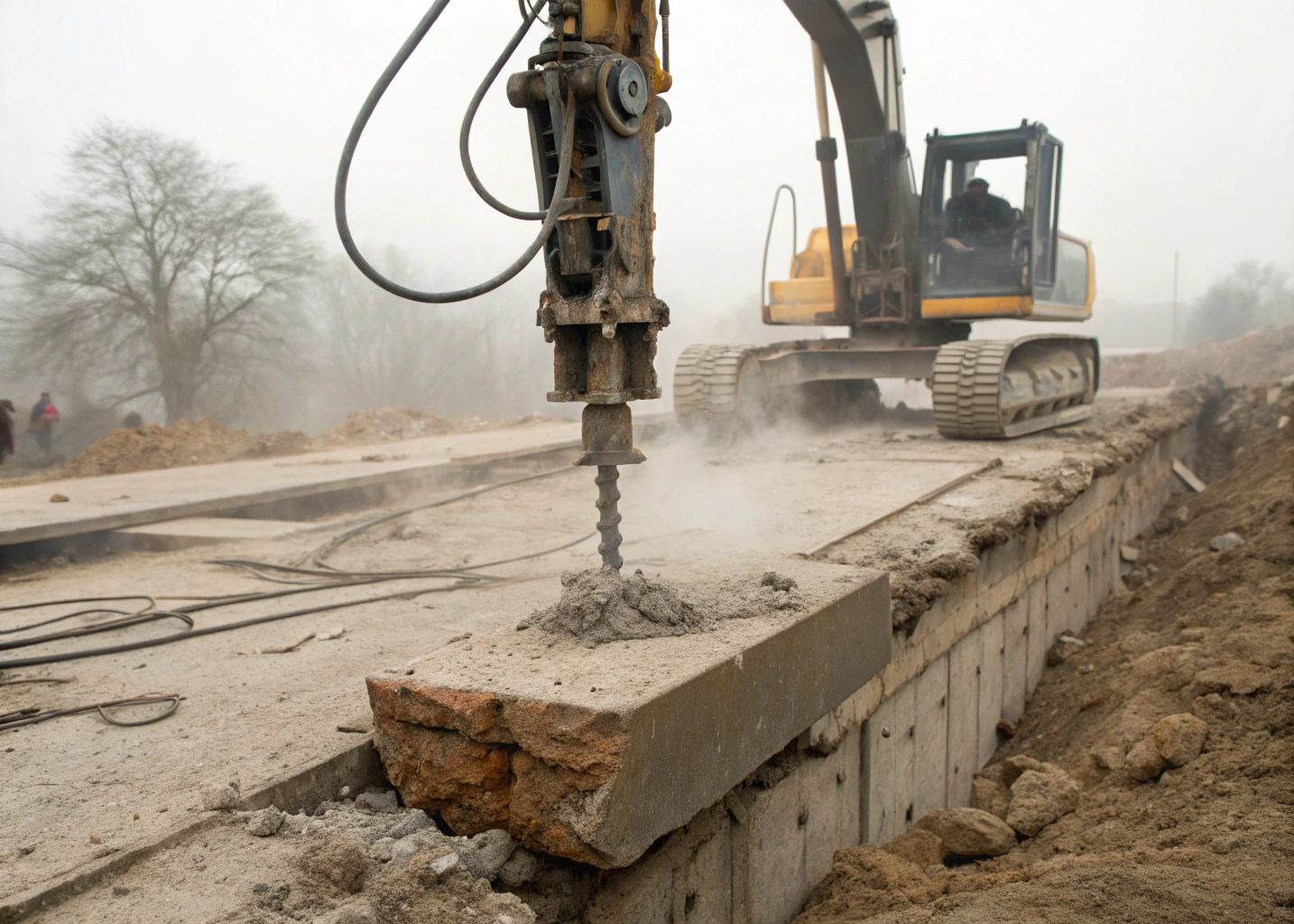
What Is Concrete Breaking?
Concrete breaking is the controlled process of breaking up and removing concrete slabs, driveways, foundations, or structures into manageable pieces for demolition, renovation, or site preparation.
Unlike full demolition, concrete breaking includes selective break-out — where only a targeted section is removed while the surrounding concrete is left intact and undamaged.
Common concrete breaking methods:
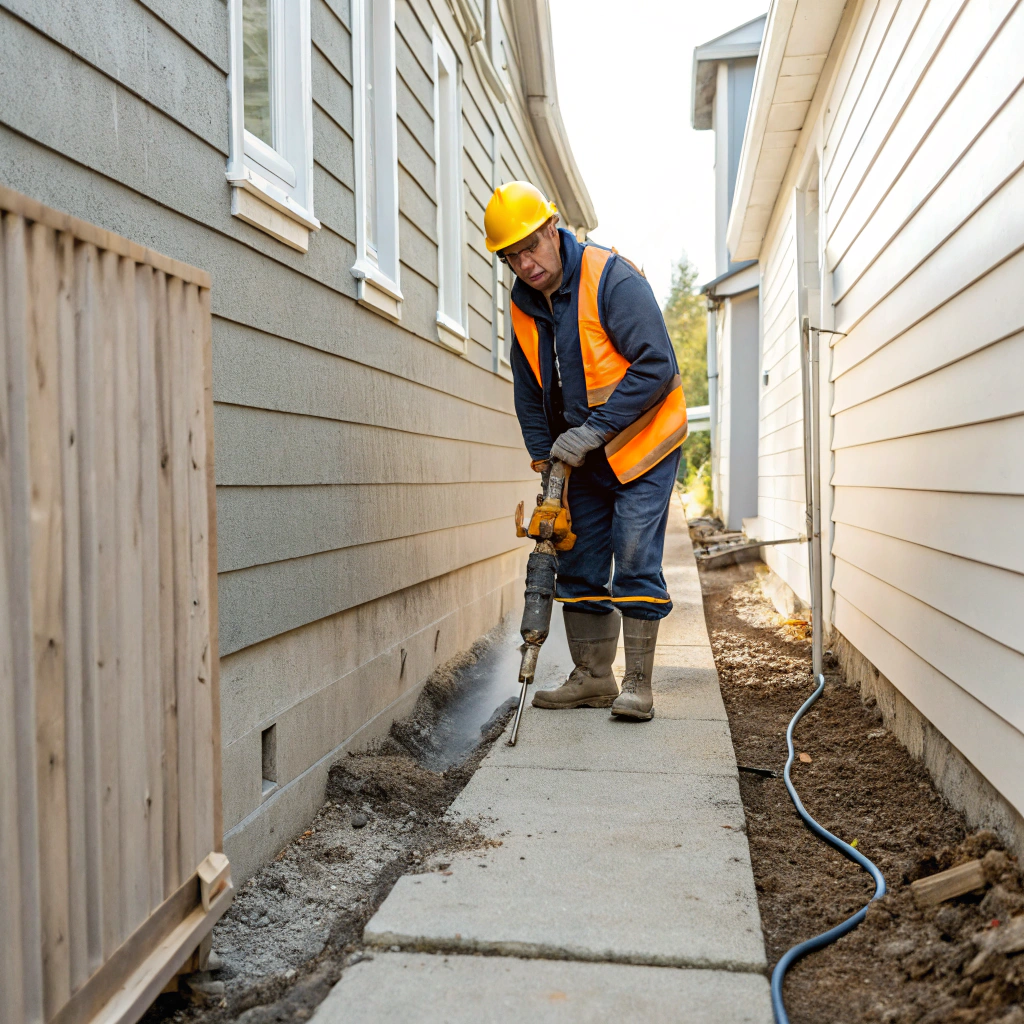
- Jackhammering — electric or pneumatic handheld tools for residential slabs, paths, and confined access areas
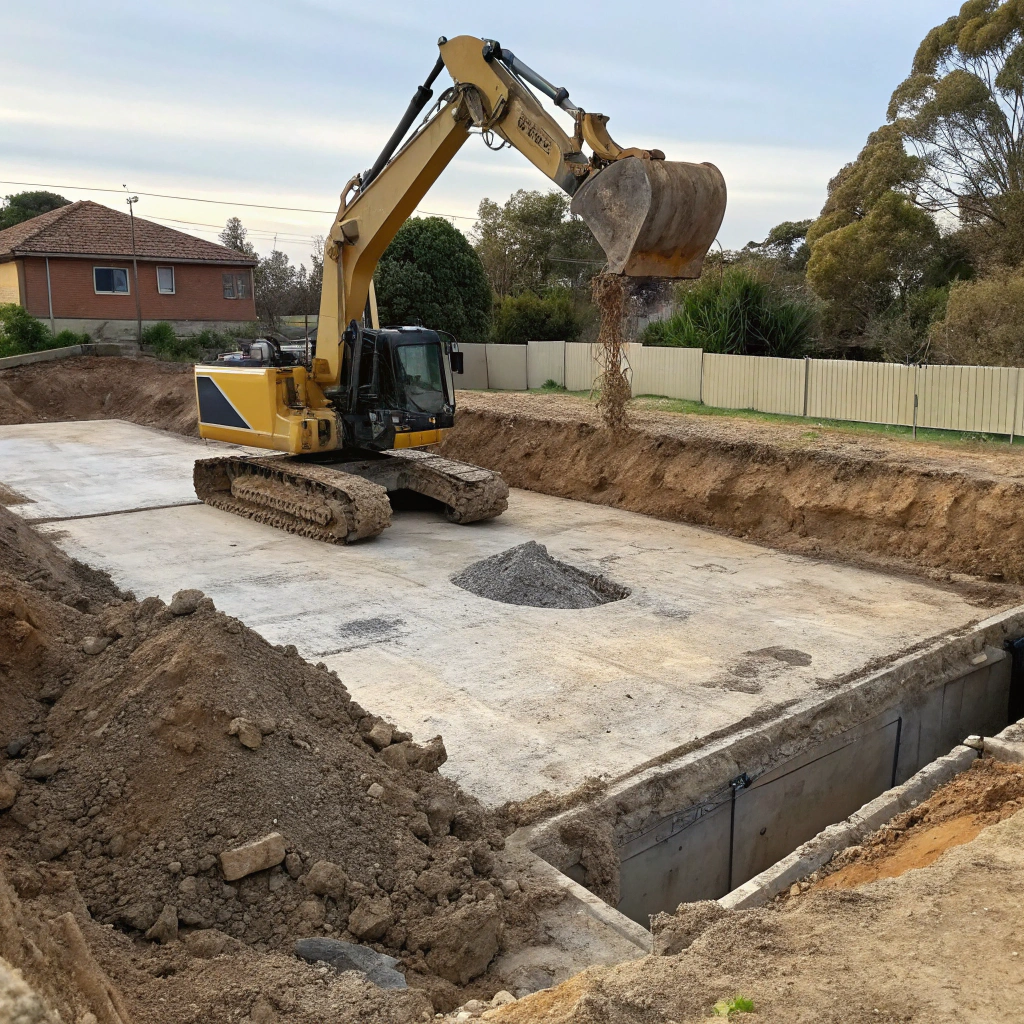
- Hydraulic breaker attachments — excavator-mounted for high-volume breaking of thick reinforced slabs and commercial floors
- Concrete sawing — cuts clean break lines before breaking begins to protect retained surfaces
- Hydraulic splitting — low-vibration method used close to existing structures or footings
Every concrete breaking job should begin with:
- Underground service identification
- Concrete thickness and reinforcement assessment
- Equipment selection matched to the material

The Right Equipment Makes the Difference
The tool we use depends on your concrete’s thickness, reinforcement, and how much room there is to work — here’s how it breaks down.
| Tool | Best Application | Thickness Range | Access Suitability |
|---|---|---|---|
| Electric Jackhammer | Paths, thin slabs, confined areas | Up to 100mm | Tight residential access |
| Pneumatic Jackhammer | Thicker unreinforced slabs | Up to 150mm | Moderate access required |
| Hydraulic Breaker (Excavator) | Reinforced slabs, commercial floors, driveways | 150mm+ | Open site or driveway access |
| Concrete Saw | Break line cutting, selective jobs | Any | Most sites |
| Hydraulic Splitter | Adjacent to footings, walls, boundaries | Any | Any |
Selective Concrete Breaking — When Only Part of the Slab Needs to Go
Sometimes only a section needs to come out — and protecting what stays behind is just as important as the breaking itself.
Saw Cutting the Break Line First
Before any breaking begins, we saw cut along the boundary of the section coming out. That cut stops the impact travelling through the slab and cracking the concrete you want to keep — skipping it turns a clean job into a bigger one.
Common Selective Breaking Scenarios
- Plumbing access — opening a section of floor or path slab to reach pipes below
- Service installations — creating openings for electrical conduit, stormwater, or drainage work
- Patch repairs — removing a failed or damaged section while retaining the surrounding slab
- Structural modifications — breaking out sections to accommodate new footings or beams
- New doorway openings — removing sections of concrete floor at threshold level for new access points
Concrete Thickness and Reinforcement — Why It Changes Everything
A 75mm residential path and a 150mm reinforced commercial floor are two completely different breaking jobs, even if they look similar from the surface.
Thickness determines how much force is needed and which equipment is suitable. Reinforcement — whether that’s mesh, rebar, or post-tension cables — affects both how the concrete breaks and the sequence we work in. Mesh holds broken sections together and needs to be cut as breaking progresses. Rebar requires more force to work through and affects how debris is managed. Post-tension cables are the most critical — cutting one without knowing it’s there causes immediate structural movement and serious safety risk.
A waffle pod house slab adds another layer of complexity. The voids beneath the surface change how impact transfers through the concrete, and breaking sequence matters more than it does on a solid slab.
Protecting What Stays Behind
When breaking happens close to house footings, boundary fences, retaining walls, or neighbouring properties, vibration and impact management become just as important as the breaking itself.
The method we select and the sequence we work in are both chosen to minimise vibration transfer to surrounding structures. In tight residential settings, that might mean switching from a hydraulic breaker to a jackhammer or hydraulic splitter — slower, but far less likely to cause movement in adjacent footings or cracking in nearby surfaces.
For jobs in established Bendigo suburbs where homes sit close together and boundary structures are shared, this isn’t a minor consideration. It’s the difference between a clean finish and a damage claim.
Underground Services — Identification Before Every Job
Before any breaking begins, underground services are identified — no exceptions.
Gas lines, water mains, electrical conduit, and drainage pipes all run beneath concrete surfaces, and in selective breaking jobs they’re most likely to be directly under the section being opened. Hitting an unidentified service mid-job is dangerous, costly, and avoidable.
We identify underground services before equipment is selected and before the first break is made. On selective jobs especially, this step isn’t optional — it’s the first thing that happens on site.
Concrete Breaking Across Bendigo — Residential, Commercial, and Rural
We work across all property types throughout Bendigo and surrounds.
Debris Management After Concrete Breaking
Once the breaking is done, the broken concrete still needs to be dealt with — and how that’s managed depends on the scope of the job.
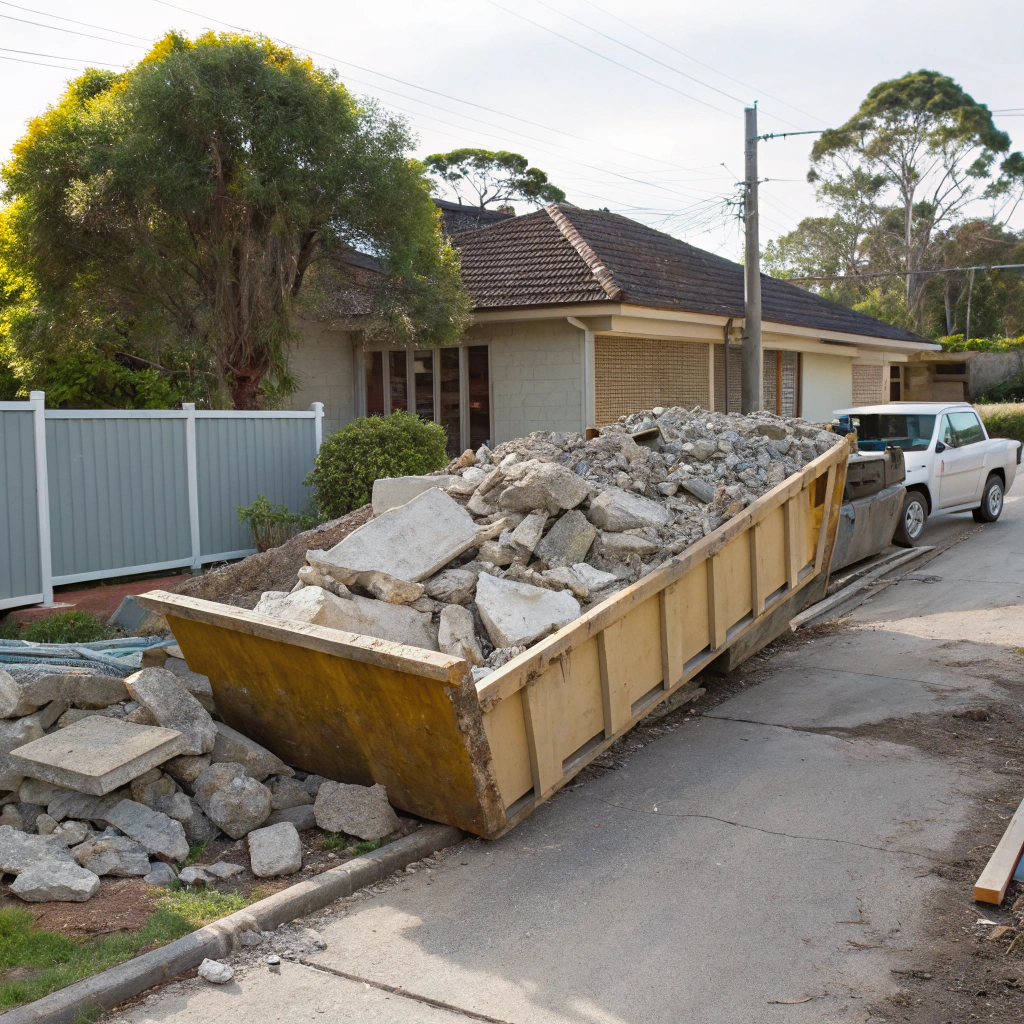
On full demolition jobs, we remove everything from site. Broken concrete, reinforcement steel, and any associated rubble is loaded and cleared. The area is left clean and ready for whatever comes next — a new pour, landscaping, or further construction work. Nothing is left for you to deal with.
On selective breaking jobs where the opening will be reinstated by another trade, rubble is managed within the work area throughout the job and cleared before we leave site. The opening is handed over clean and ready for access.
Broken concrete doesn’t go to landfill where it can be avoided. Concrete rubble can be crushed and recycled as base material, and we dispose of it responsibly through appropriate facilities.
Frequently Asked Questions
We assess your concrete before we start — thickness, reinforcement type, and site access all factor into which equipment we bring. We don’t default to one tool for every job.
Yes. We saw cut along the break line first, which stops the impact from cracking the concrete you want to keep. Selective breaking is something we do regularly across Bendigo.
Always. We identify gas, water, electrical, and drainage services before any equipment touches the ground. This is the first step on every job, no exceptions.
Generally anything over 150mm reinforced is better suited to a hydraulic breaker attachment. We’ll confirm this during the assessment.
Yes. On full demolition jobs we remove everything — broken concrete and steel reinforcement included. On selective jobs the area is cleared and handed over clean.
Yes. We use electric jackhammers for confined areas where machinery can’t get in. It takes longer but the result is the same.
Yes, but we adjust our method when working close to footings, fences, or neighbouring structures. In those situations we’ll use lower-vibration equipment to avoid any movement or cracking in adjacent surfaces.
Get a Free Concrete Breaking Assessment
Before we recommend anything, we assess your concrete type, thickness, and site access to make sure the right equipment goes to the right job.
How it works:
- Assessment — We look at your concrete, your site, and what needs to come out
- Quote — You get a clear, upfront price before any work begins
- Schedule — We lock in a time that works for you and get it done
Serving Strathdale, Maiden Gully, Kangaroo Flat, Epsom, White Hills, and all Bendigo surrounds.
Call us today for a free quote
